
The first time I watched a friend scoop a pickleball off the court with his paddle, I laughed out loud. Then I tried it myself, and my right knee reminded me why I needed it. I am 64, I had that knee scoped years ago, and I play four or five mornings a week at the city park courts. Bending down after every rally ball is not a small thing anymore. The QOGIR paddle retriever is the tool that fixes exactly that problem, and I have used mine long enough to know what it does well and where it falls short.
I also borrowed a ball hopper tube from a friend at the rec center and spent two weeks with it. Short answer: if you want a retriever that lives on your paddle and never adds anything to carry, the QOGIR is the better buy. If you want to clear a court of stray balls in one trip, the hopper tube wins. For most recreational players over 50, I would pick the QOGIR. Here is the honest version of that comparison, based on a few months of using both.
How I Tested Both
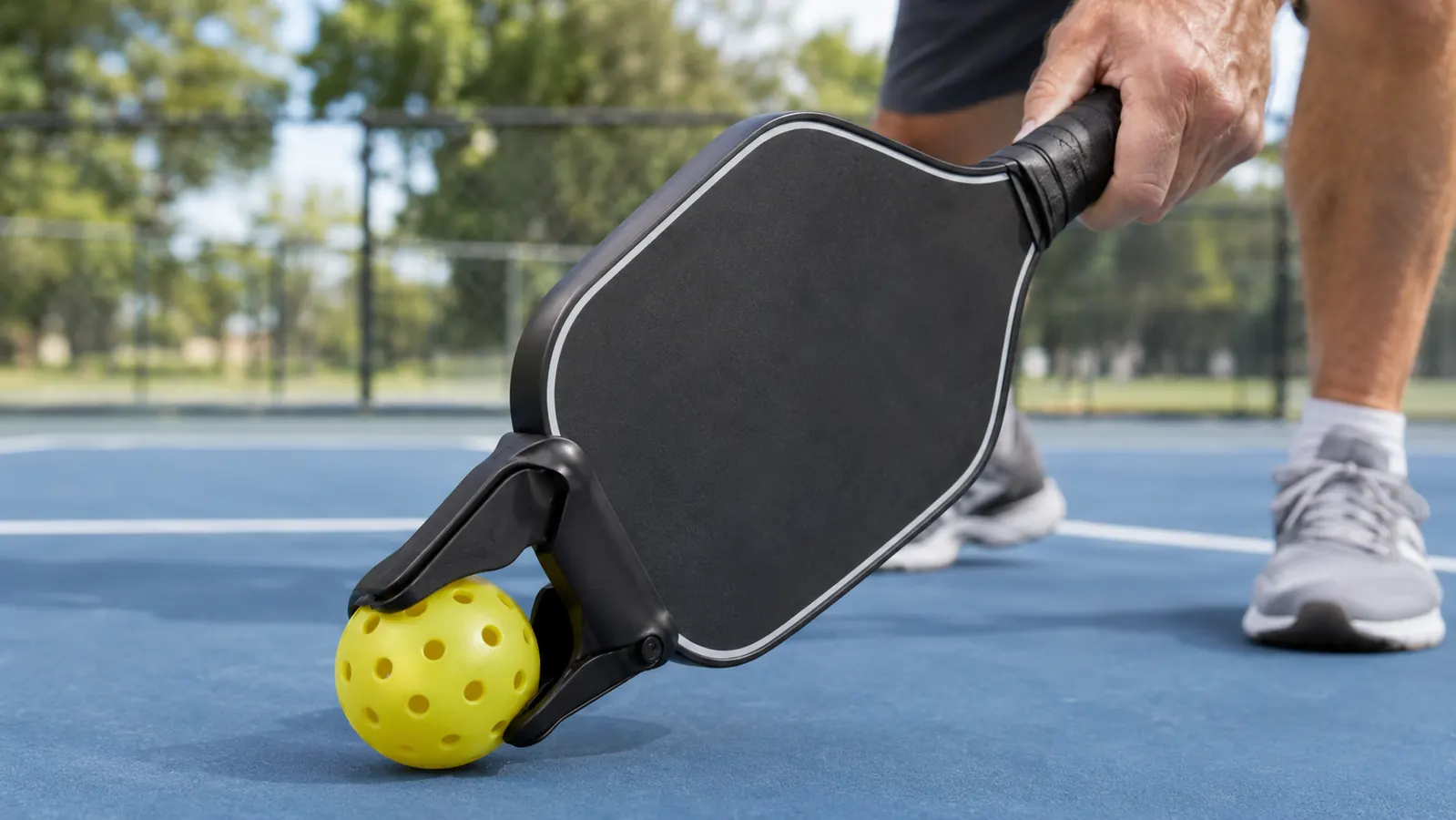
I used the QOGIR on my usual paddle during morning doubles, both outdoors and at the rec center when it rained. I also set up the portable net in my driveway and drilled on my own, which is where most of the bending happens. The retriever clips onto the paddle edge, and you press the paddle face down over the ball. The ball locks against the paddle, and you lift it to your hand or drop it into a basket.
The hopper tube is a different tool entirely. It is a tall tube with a handle. You press the open end over a ball, the ball pops up inside, and you keep going until the tube is full. The one I borrowed held six balls. That sounds great, but it also means carrying a tube around the court for the whole game, and finding a place to put it when you are at the line.
I kept notes on how each one felt the next morning, because that is the real test for me. My knee and my leftover tennis elbow do not care about marketing photos. They care about how many times I bent over, how awkward the motion was, and whether I was reaching for the ibuprofen after the second game. I also paid attention to how the tools felt in my hand, because a gadget that annoys you will end up in the garage by week two. One Thursday in March, I counted 41 bends during a single hour of doubles, and that was the day I started testing seriously. I wrote the number on a scorecard and showed it to Linda, who laughed until she thought about her own knees. After that, each tool got a full week of the same drill routine, same court, same time of morning, so the only variable was the tool itself.
| QOGIR Paddle Retriever | Ball Hopper Tube | |
|---|---|---|
| Capacity | Holds one ball against the paddle | Stores six or more balls in the tube |
| What you carry | Nothing extra. It stays clipped to your paddle | A tube in one hand plus your paddle in the other |
| Learning curve | A few practice pickups to find the right angle | Press and go, almost no practice needed |
| Reaching low spots | Flat paddle face slides under benches and fences | Round tube needs vertical space and misses low spots |
| Storage and bag | Small, lives on the paddle, fits in any bag | Bulky, rides in the car or hangs on a hook |
| Best for | Daily doubles and solo drilling with no extra gear | Clearing a court or clinic in one trip |
| Knee and wrist strain | Natural upright stance, no extra weight | Upright, but the tube adds weight to the wrist and shoulder |
| Price | Lower cost, easy to justify for one player | Costs more, makes sense if you maintain a court |
Where the QOGIR Wins
The biggest advantage is that the QOGIR is always there. It clips onto the paddle and stays put through a whole session. When a ball stops at your feet, you do not think about it. You lower the paddle, press, lift, and hand the ball to your partner or drop it by the post. The motion takes two seconds, and your knees never leave the conversation.
It also reaches places a tube cannot. Under the bench at the park courts, against the fence line, in the corner by the net post. The flat paddle face slides where a round tube will not fit. For doubles, where balls die in awkward spots all morning, that matters more than I expected. I tested that specifically by leaving a ball under the bench and using each tool to fish it out. The bench at court two has a gap of maybe four inches between the seat and the pavement. The QOGIR slid under, caught the ball on the first press, and lifted it out clean. The tube could not get low enough, and I ended up on one knee, which defeated the whole point of the exercise. That was the moment I stopped doubting the paddle method.
And because it lives on the paddle, you cannot forget it. I have left sunscreen, water bottles, and once a whole bag of balls in the car. I have never left the QOGIR at home, because it is not a separate item. It is part of the paddle I grab every morning.
Where the Ball Hopper Tube Wins
The hopper tube wins the cleanup job, no contest. After a drill session or a group clinic, there are twenty balls scattered around. With the tube, you walk the court, press, press, press, and carry six balls at once to the basket. With the QOGIR, you shuttle one ball at a time, which turns a two-minute cleanup into a ten-minute one. I timed a full court cleanup with each tool, because that is the job the tube is built for. After a Saturday clinic in April, I counted 28 balls on the court. The tube cleared them in three trips and about four minutes. The QOGIR took nine trips and just over eleven minutes, and I felt every one of those trips by the time I finished. If you are the person who cleans up after everyone, that difference is the whole review.
It is also easier for someone with limited hand strength or a sore wrist. Pressing the tube over a ball is a simple straight-down motion. The QOGIR needs a little wrist control to keep the ball from rolling off the paddle face. My tennis elbow handled both fine, but I can see the tube being kinder to a player with arthritis.
The tube also keeps balls off the ground while you walk. If you are picking up balls for a partner or a group, you can gather a handful and keep moving. The QOGIR holds one ball against the paddle, which means you are either carrying that ball by hand or making a trip to the basket after every pickup.
Stop bending without carrying extra gear.
The QOGIR retriever clips onto any paddle, picks up balls without bending, and disappears into your bag. I have used mine for months, and it is the first thing I pack.
Amazon Check Today's Price on Amazon →Who Should Buy Which
Buy the QOGIR if you play doubles most mornings, drill solo in the driveway, and want a retriever that never gets left in the car. Buy the hopper tube if you run clinics, maintain a court, or hate making multiple trips to the basket. Most recreational players I know, including Linda, prefer the QOGIR because it is part of the paddle, not another thing to hold. If you are still deciding, borrow a tube for a week and buy the QOGIR. That is the cheapest way to learn what you actually need.
If you want the longer version of why bending over became a real problem for me, [here is that story](/articles/picking-up-pickleballs-without-bending-over-story). The short version is that the problem is not the ball. The problem is the thousand small bends you do not notice until your knee does.
The Tradeoff Nobody Mentions
The QOGIR holds one ball at a time, and that is the whole tradeoff in one sentence. If you are the kind of player who likes to gather five balls before walking back to the basket, the single-ball pickup will annoy you. I know because it annoyed me for the first week.
What changed my mind was the morning I forgot to bring it. I spent the first game bending down, and by the third game my knee was talking to me. The tube prevents that too, but only if you remember to carry it to the court. The QOGIR lives on the paddle, so it is always there. That single fact is one of the [ten reasons a retriever saves your back and knees](/articles/10-reasons-ball-retriever-saves-your-back-and-knees).
How They Handle a Bad Knee
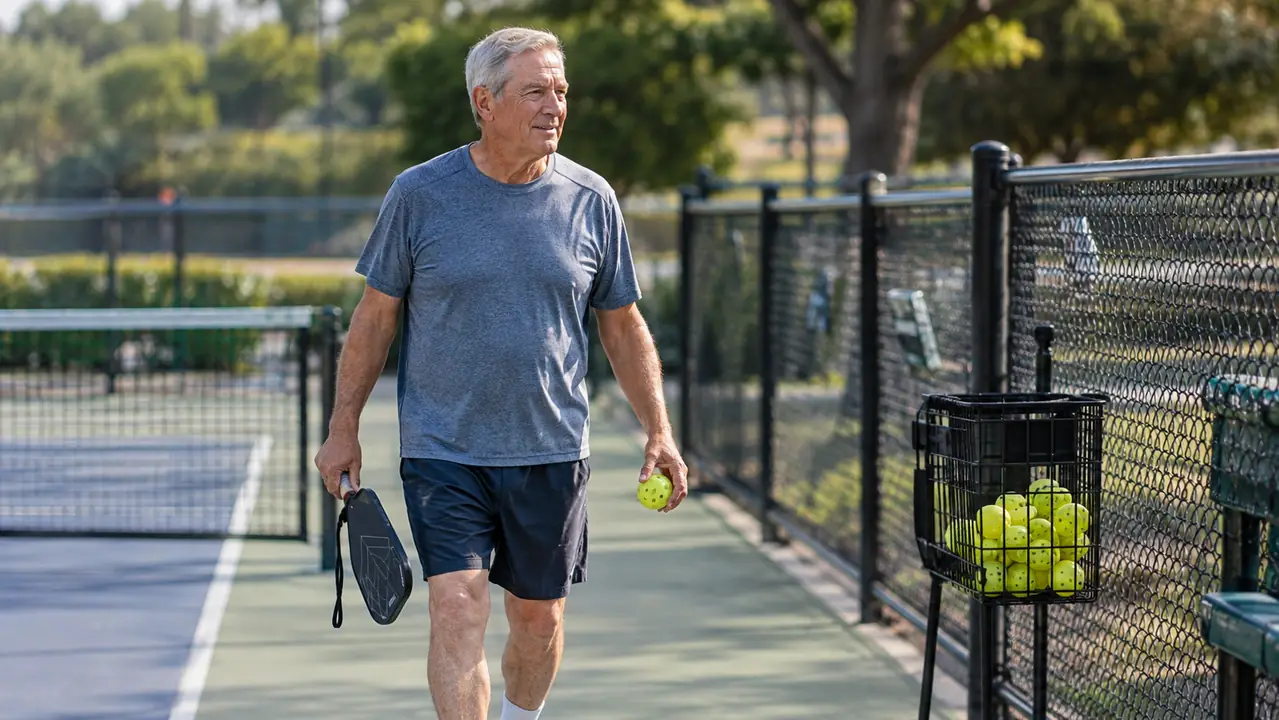
Both tools do the same primary job: they keep you upright. For a 64-year-old with a scoped knee, that is the whole point. The difference is in the details. The QOGIR keeps you in a natural ready position, paddle out front, weight balanced. The tube asks you to bend slightly at the waist to reach the ground, which is easier on the knees than a full squat but not as clean as the paddle motion. I have played through both a scoped knee and a bout of tennis elbow, so I pay attention to which motions cost me the next day.
I also noticed a difference in how I moved between points. With the QOGIR, I kept the paddle in my hand and stayed low and ready. With the tube, I found myself carrying it in my right hand, which changed my footwork and put a little extra load on my shoulder. Neither one hurt me. But the QOGIR felt like part of the game, and the tube felt like a chore.
What About Storage and Setup?
Setup is where the QOGIR wins by a mile. It clips onto the paddle in seconds, and you can leave it there. It does not change the balance of the paddle much, which surprised me. I was worried it would feel like a brick on the edge, but I stopped noticing it after the first few swings. I am not handy, so anything that requires tools or fiddling would have been a dealbreaker. The clip has a small locking tab, and on the first day I did not seat it fully, so the retriever slid a quarter inch during a serve. Once I pushed the tab down until it clicked, it stayed put through four straight sessions. I checked it after every game for the first two weeks, and it never moved again.
The tube has no setup at all, but it has a storage problem. It is too tall for most pickleball bags, so it lives in the car or on a hook by the door. That means it is a decision you make before you leave the house. The QOGIR is a decision you make once, when you clip it on.
What the Specs Don't Tell You
Spec sheets will tell you that the QOGIR fits any paddle and the tube holds six balls. They will not tell you how each one feels after an hour of doubles. The QOGIR is quiet and unobtrusive. The tube rattles a little when it is half full, and you will hear the balls clacking together as you walk. It is not a big deal, but it is the kind of thing you notice on a quiet morning court.
They also will not tell you how each one behaves in the rain. The rec center courts stay dry, but the park courts do not. The QOGIR kept working on damp balls, and the tube did too. Neither one cared about a little water. That was a relief, because I play through light drizzle more often than I would like.
Which One Would I Buy Again?
I bought the QOGIR, and I would buy it again. It is not the right tool for every job, and I go into more detail in my [long-term review](/articles/qogir-pickleball-ball-retriever-review-long-term). But for the way I play, four or five mornings a week, mostly doubles, it is the difference between walking off the court fine and limping to the car.
The hopper tube is a better court-maintenance tool. If I ran a clinic or took care of a shared court, I would own one. But I am a player, not a groundskeeper. I want the tool that is already in my hand when the ball stops at my feet. That is the QOGIR.
Stop bending. Start playing.
The QOGIR paddle retriever fits any paddle, takes seconds to learn, and saves your back and knees every single session. Check today's price on Amazon and see if it belongs in your bag.
Amazon Check Today's Price on Amazon →