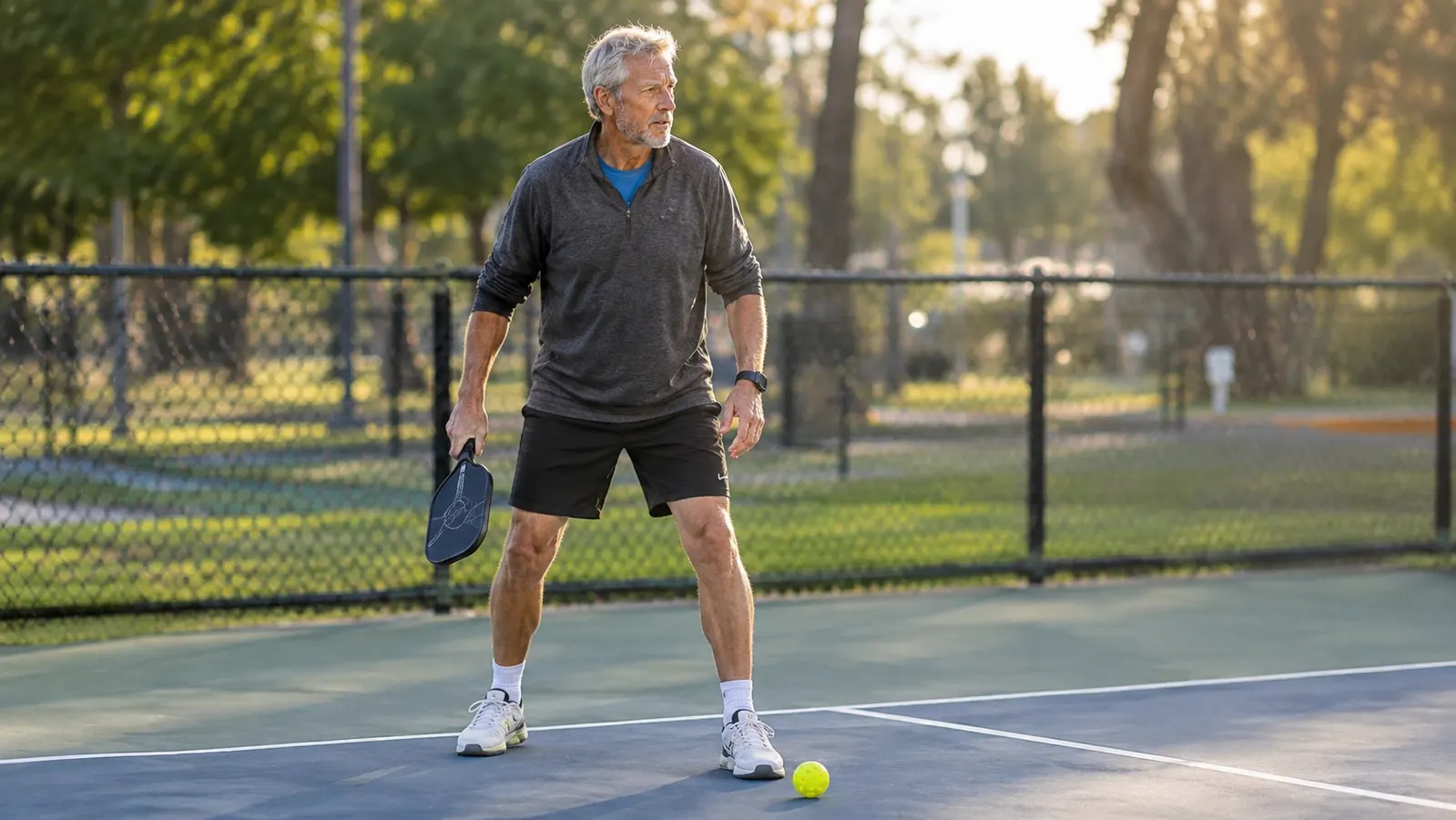
Somewhere around the third week of last season I did the math on bending over. I am 64 years old, I have a right knee that was scoped a decade ago, and I play pickleball four or five mornings a week, mostly doubles at the city park courts in Santa Rosa. On a normal doubles morning I bend down for a dozen balls or more. That works out to more than a hundred bends a week, and every one of them is a small vote against my knee and my lower back. That is why I bought the QOGIR Pickleball Ball Retriever, and it is why the retriever has been mounted on my paddle every session since.
After a full season of near-daily use I have a clear picture of what this thing does well, what it does badly, and who should buy one. The short version: it has saved my knee more mornings than I can count, it takes about a week to feel natural, and it is not for everyone. The long version is below, and I have tried to be as honest about the annoyances as I am about the wins.
The Quick Verdict
The QOGIR retriever does one job and does it well: it gets balls off the open court without a bend. After six months of near-daily doubles it is still mounted on my paddle, and if it broke tomorrow I would order another one before I played again.
Amazon Check Today's Price →A season of doubles without a hundred bends a week
The QOGIR retriever clips onto any paddle edge and scoops balls up without you leaning over. It has been on my paddle every session for six months, and it is the first thing I pack with my gear.
Amazon Check Today's Price on Amazon →How I've Used It
Linda and I usually get to the courts around 8 on weekday mornings. We play doubles with whoever shows up, which is usually the same group of retired and semi-retired people, and when it rains we move indoors to the rec center. The retriever has been on my paddle in both settings, outdoor concrete and indoor gym floor, and it behaves the same on both surfaces.
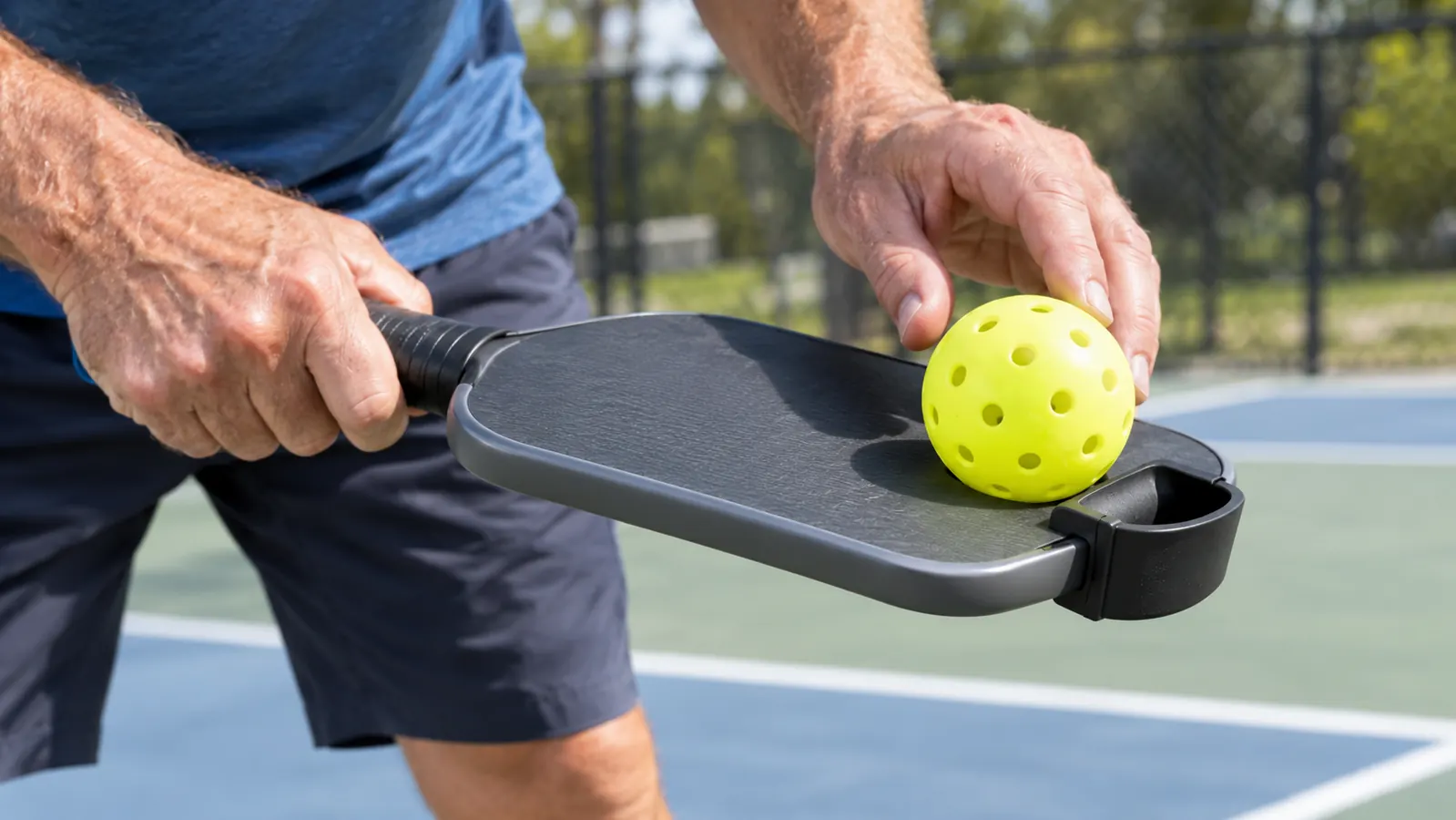
The way it works is simple. A plastic clamp grips the edge of the paddle face, and a small lip sticks out just past the edge. You set the lip next to a ball, slide the paddle flat along the court, and lift. The ball rolls onto the paddle face, the lip keeps it from rolling off the far side, and then you tilt the paddle and catch the ball in your hand. The whole motion takes about two seconds once you have the feel for it.
The first two sessions were clumsy. I popped a ball off the edge once, sent another rolling across the court, and nearly hit my own shin swinging the paddle around between points. By the second week it felt normal. By the third week I was picking up balls without looking down, and that is the whole point of the tool.
I should say what I mean by a season. I bought the retriever in the spring, and I have played through the summer and into the fall. The courts get a lot of use, the mornings get foggy, and the concrete gets damp. The retriever has been through all of it.
How the Mount Holds Up
The mount is two plastic jaws that clamp onto the edge of the paddle. It is designed to fit any paddle, and I have tested it on two of mine: a standard wide-body and a thinner one. The grip adjusts with a twist lock, and it held tight on both paddles. I have tightened the screw exactly once in six months. The twist lock is easy to use with the hand you do not play with, which matters when you are standing on a court and not in a workshop.
I have been harder on this thing than I planned. It has taken some hard knocks against the court surface, sat in a hot car for a full afternoon, and been rained on at the outdoor courts. After all of that the clamp is intact, the rubber grip pad is still in place, and the lip has not cracked. That is better durability than I expected from a piece of molded plastic.
One honest note about paddle feel. I have a leftover touch of tennis elbow, so I was watching for any change in balance or vibration. The retriever adds a few grams to the top edge of the paddle. I did not notice it. The paddle still feels like my paddle, and that surprised me, because I notice small changes in gear more than most players.
The one thing that wears is the grip pad if you mount it on a paddle with a slick edge. I cleaned the edge before mounting, which I recommend, and I have not had the clamp slide. If yours slides, clean the edge, tighten the screw, and it will stay put.
Does It Actually Save Your Back and Knees
The honest answer is yes, for the balls it can reach. A bend avoided is a bend avoided. I play a typical doubles session with maybe a dozen balls stopping near me. At five sessions a week, over six months, that works out to roughly 1,400 bends I did not take. My lower back has been the quiet winner of that trade. I kept a rough tally for the first month to see if the tool was actually earning its place, and it was.
My right knee was scoped in my early fifties, and it still gets stiff in the morning. I cannot tell you the retriever fixed my knee, because nothing fixes a knee that has been opened up. What I can tell you is that the days I play are not the days my knee complains. Before the retriever, I could feel the difference on bending-heavy mornings, and I do not feel it the same way anymore.
The limits matter too. The retriever cannot help with a ball that stops dead against the net, one wedged under the fence, or one sitting in the middle of a puddle. You will still bend sometimes. Just a lot less often, and for me that is the difference between a good morning and a stiff one.
What It Is Like in Actual Play
The technique is not what people expect. You do not scoop like a shovel. You slide the paddle flat along the court, let the ball roll onto the face, then lift and tilt in one motion. The lip catches the far edge of the ball so it does not fall off. Slow is smooth, and smooth is fast. The people who fail with this tool are the ones who try to scoop fast.
On the court it changes the rhythm of the game in a small way. When a ball stops near you, you can have it in your hand in two seconds and be back in position for the next shot. Your partner notices that. Linda noticed, and she is not someone who notices gear.
Nobody has given me a hard time about it. A couple of players asked about it, and one friend ordered one and returned it because he could not get the hang of it. That is a real outcome, and I would rather tell you about it up front than pretend the tool works for everyone. It does not.
One thing I did not expect: it is a good conversation starter. Older players at our courts have bad knees and backs, and the retriever on the paddle edge is visible. I have had three separate players ask me about it in the parking lot. That does not make it a better tool, but it tells you the problem is common.
The Annoyances and Tradeoffs
First, do not drag the lip along the court. It is not a shovel, and it will catch on a rough patch or a court seam. Slide, lift, done. Dragging is the mistake that makes people think the tool is broken, and it is also how you wear down the lip faster than you should.
Second, it adds a little bulk to the paddle edge. I have clipped my own shin twice swinging the paddle around between points. It leaves a mark, and it was my fault both times. If you spin your paddle between points, you will do this at least once, so give the paddle a little more room.
Third, the screw that holds the clamp can work loose over months, not weeks. I tightened mine once and it has been fine since, but I check it every few weeks. On a damp court the ball can stick to the paddle face, and a quick shake fixes that.
Fourth, there is a small learning curve for the catch. You have to tilt the paddle at the right angle or the ball rolls off the side instead of into your hand. I have seen players give up on this tool in the first week because of that. Stick with it for a week, and the catch becomes automatic.
How It Compares to the Alternatives
The tube style is what most of the younger players use. You push a long tube down over the ball and squeeze to trap it. They work well, but they take two hands, they live at the side of the court, and I have watched players walk back for them. The QOGIR advantage is that it is always with you, because it is mounted on the thing already in your hand.
The reaching grabber is the other common option. It handles grass and net balls that the paddle mount cannot, and it lives in your bag. The tradeoff is that you have to remember to deploy it. I have seen exactly one player use a grabber consistently, and he is the most organized person I know.
For my game, the always-with-you factor wins. The QOGIR covers the most common case, the ball at your feet on open court, with zero extra steps. The alternatives cover more situations, but they only work if you remember to bring them into play, and I am not that organized.
What I Liked
- Mounts on any paddle, so it is always with you with zero extra steps
- Eliminates most of the bending in a typical doubles session
- No real change to paddle feel or balance, even with my tennis elbow
- Simple and durable: six months of daily use, one tightening, no cracks
- No moving parts, nothing to charge, nothing to lose
Where It Falls Short
- Takes about a week to feel natural, and some players never get the hang of it
- Cannot reach balls in the net, under fences, or flat against walls
- Adds a little bulk to the paddle edge that can clip your shin if you swing carelessly
- The clamp screw works loose over months and needs an occasional tightening
- You still reach down to shin height, so it is not a full solution for serious mobility limits
Roughly 1,400 bends I did not take in six months. That is the whole review.
Who This Is For
If you are over 50 and you feel the morning after more than you used to, this is for you. If you have a knee or a lower back that complains when you bend, this is for you. If you play most of your pickleball on open court surfaces, this is for you. And if you want a solution that requires zero extra steps, because it lives on the paddle you already hold, this is for you.
It is also for the player who wants to keep playing without making a production out of it. The retriever is not a medical device and it is not a performance part. It is a small piece of plastic that removes a few hundred bends a month from your game, and that is a real thing for bodies our age.
Who Should Skip It
If reaching down to shin height is genuinely hard, skip it, because you still do some reaching. If you play mostly on grass or in net-heavy areas, skip it. If you have no patience for a week-long learning curve on a simple tool, skip it. And if you are a competitive player who wants nothing extra on the paddle, skip it and use a tube like everyone else.
The honest framing is that this is a comfort tool for recreational players, not a performance part. It will not make you a better player, it will not fix a serious back problem, and it does not replace the advice of a doctor or a physical therapist. It just takes a load off your knees and your back, and for a lot of us that is enough.
Six months in, the retriever is just part of my gear. It goes in the bag with the paddles and the balls, it comes out on the court, and I do not think about it until a ball stops at my feet. That is the best thing I can say about any piece of gear: it does its job quietly, every session, and I would rather have it than not.
Six months in, I would buy it again
The QOGIR retriever has been on my paddle every session since last spring. If it broke tomorrow I would order another one before I played again. Check the current price on Amazon and see if it fits your game.
Amazon Check Today's Price on Amazon →