If you play doubles, you know the exact moment I mean. The ball rolls dead at the kitchen line, both players look at it, and somebody has to go get it. For years, that somebody was me, and by the tenth bend of the morning my right knee, scoped back when I was in my forties, was filing a complaint I could hear clearly.
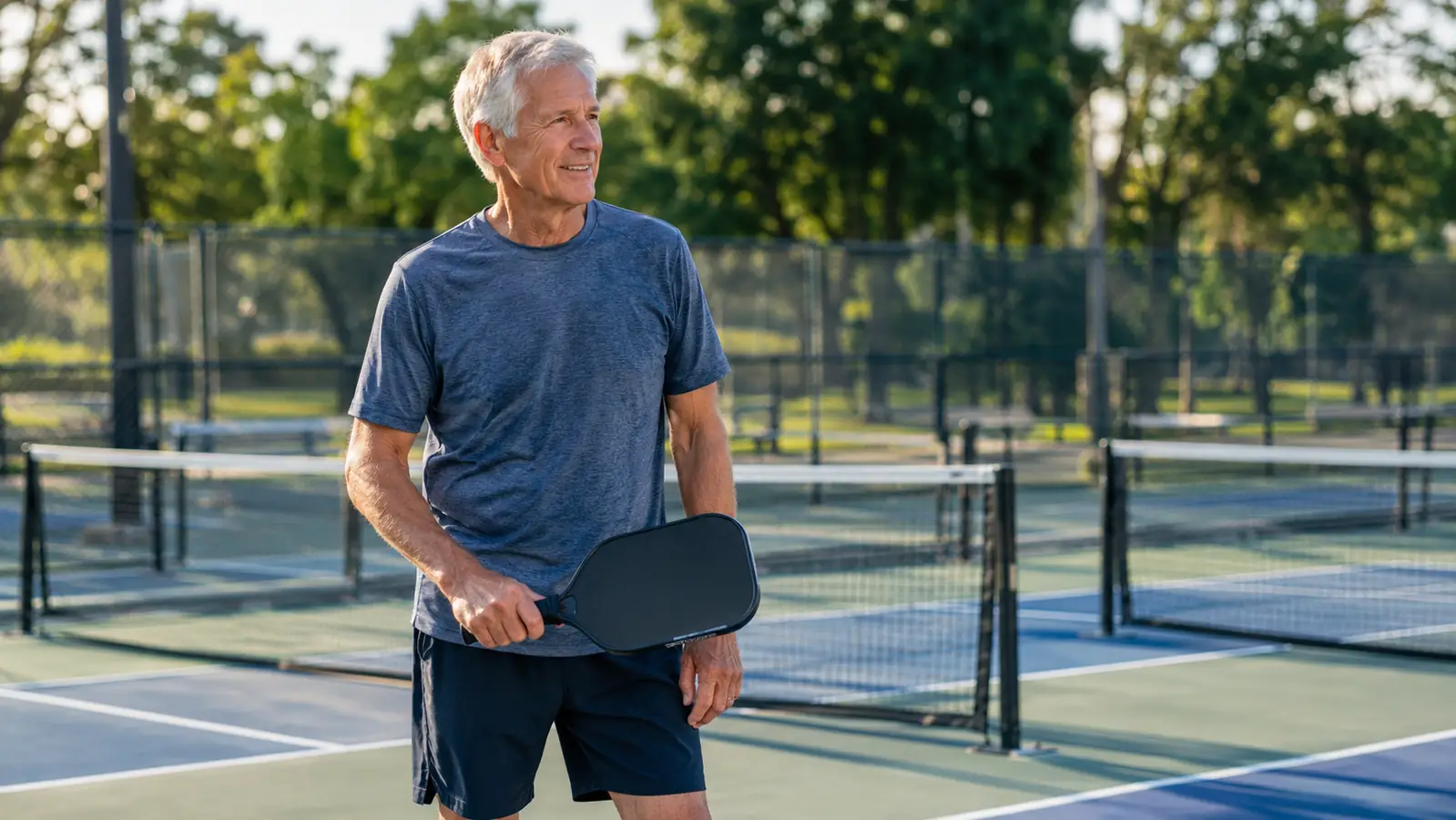
I'm Gene Whitacre, 64, a retired civil engineer in Santa Rosa. I played tennis through my forties and switched to pickleball about five years ago when a neighbor talked me into a Saturday clinic. Now I play four or five mornings a week, mostly doubles at the city park courts, and indoors at the rec center when it rains. I'm a solid intermediate, around a 3.5, and I care more about how I feel the next morning than about spin rates. So when a guy at the courts started talking up a paddle-mounted retriever from QOGIR, I was listening.
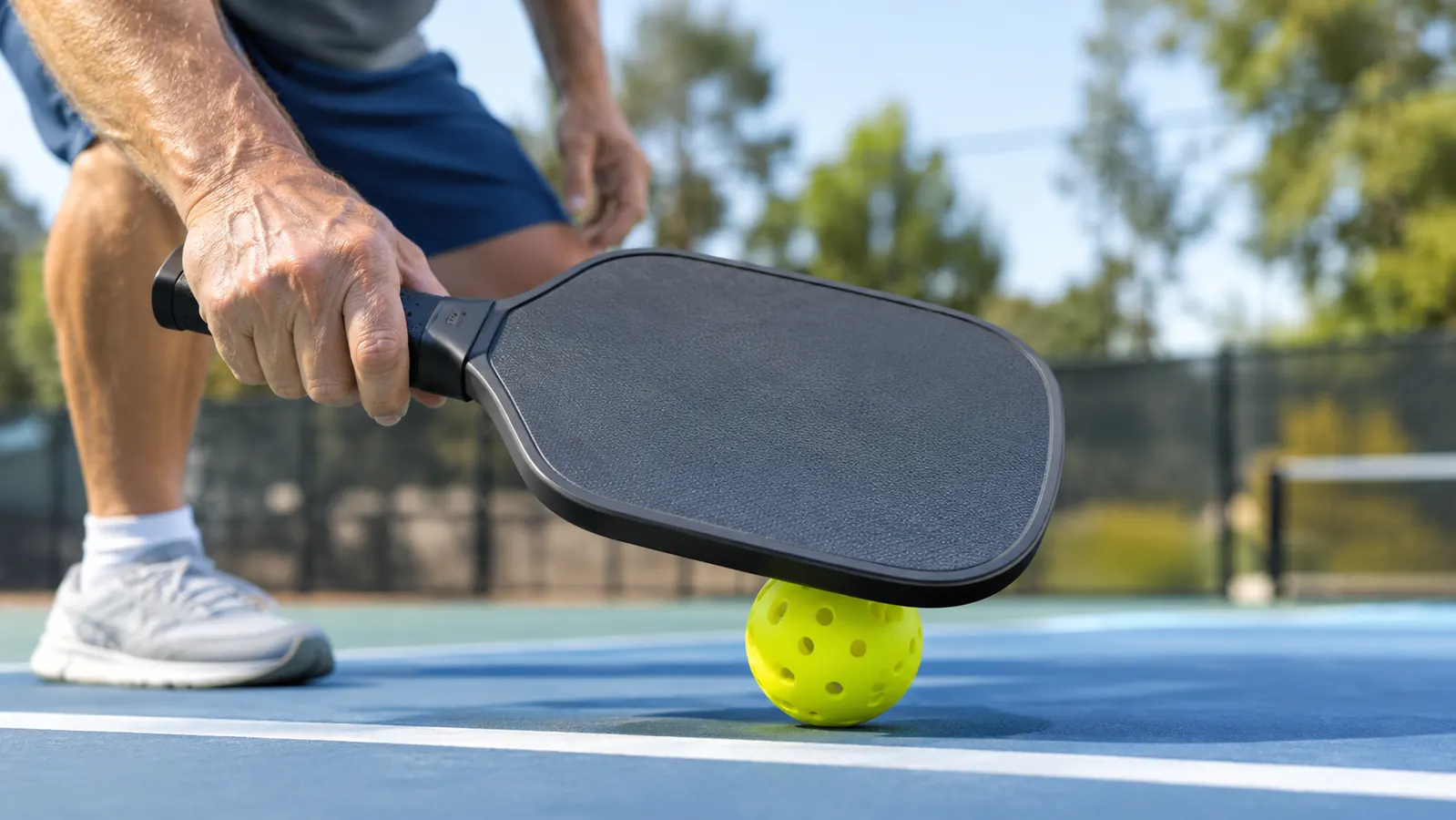
One Tuesday I decided to count. Twenty-three bends in a single doubles game, and most of them weren't even for balls I needed. Some were for balls that were already dead, some were for balls I could have let the other team chase, and some were just habit. The next morning my knee let me know it had been keeping score too.
Before I borrowed his, I'd tried every workaround a retired engineer can think of. Picking the ball up with the edge of the paddle works until it dents the paddle. Kicking it toward the fence works until it rolls into the next court. The little squat-and-hope just made my knee angrier. None of them fixed the real problem, which was that I was bending over twenty or more times a game and my body was charging me interest.
The QOGIR retriever is a small plastic piece that clips onto the handle of any paddle. You press it over the ball, lift, and the ball drops into your hand. That's the whole mechanism. No bending, no squatting, no paddle-edge tricks. I borrowed his, played one game with it, and ordered my own that night. It took me about two games to get the angle right. The first time I tried it, I pressed too hard and the ball squirted sideways. The second game I figured out that you don't push down, you just set the retriever over the ball and lift.
I counted twenty-three bends in one doubles game. That was the morning I stopped telling myself the bending was just part of the game.
One small clip that takes the bend out of every ball pickup
It fits any paddle, takes two games to get used to, and stays on your handle so you never have to remember it. That's the whole pitch, and it's the whole reason my knee stopped complaining.
Amazon Check Today's Price on Amazon →Here's what surprised me: it's not just my knee that's happier. I'm not winded after the third game the way I used to be. I'm not dreading the rallies that spray balls into the next court. And I'm not the guy holding up the game while he walks a ball down. Linda noticed before I said a word. She just watched me one morning and said, "You're not doing that little grunt anymore." She was right. I hadn't even noticed it was gone.
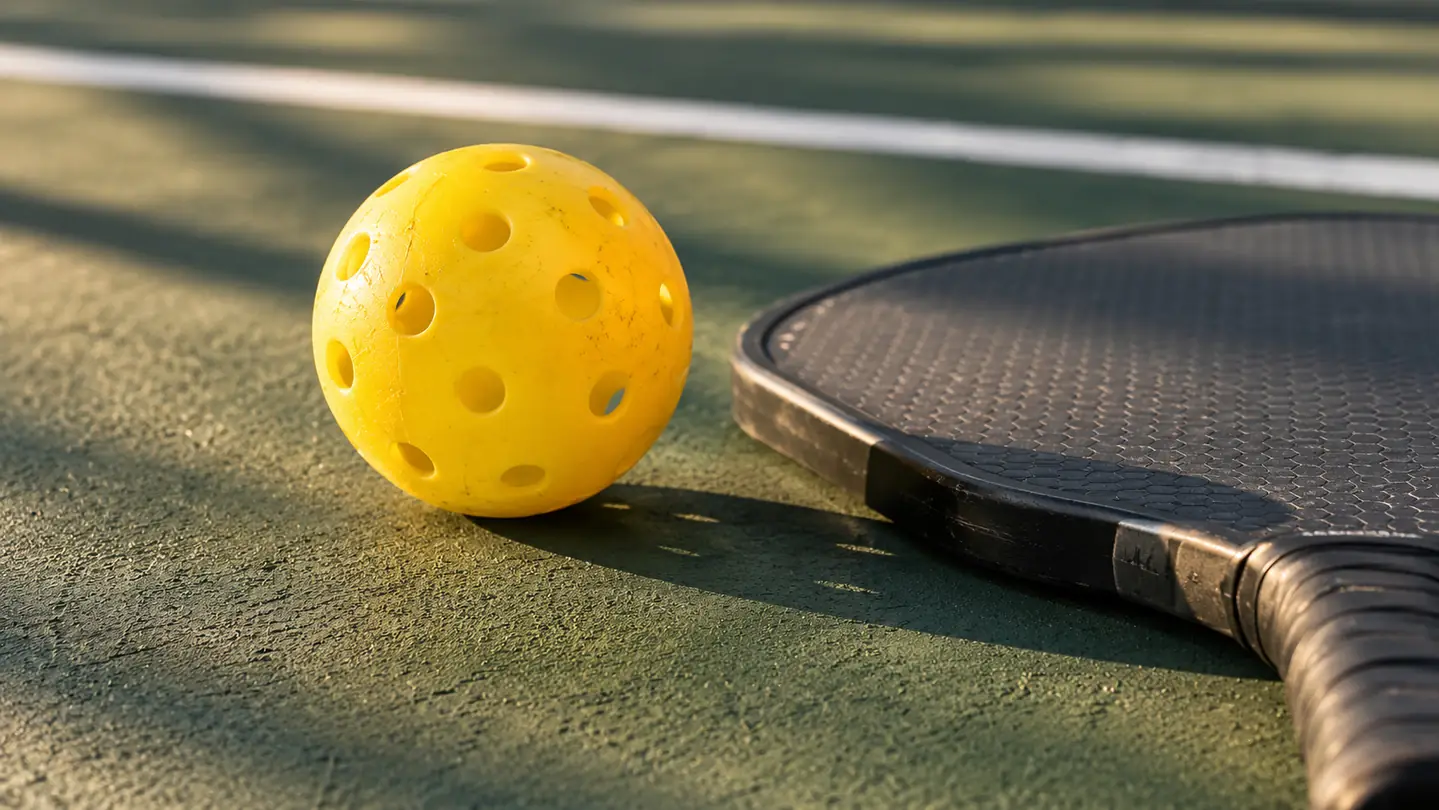
I also use it in the driveway when I'm drilling on my own. I set up the portable net between the cars, hit a few dozen balls, and the retriever means I can keep the rally going without stopping to pick up a ball every thirty seconds. It sounds like a small thing, but it turns a ten-minute practice into a forty-minute one, because the momentum never dies.
It's not perfect, and I won't pretend it is. The QOGIR retriever adds a little weight to the paddle, and if you're sensitive to that, you'll feel it during a long session. It looks a bit odd clipped on there, like a small tool riding along on your handle. And it doesn't help with balls that roll deep into the fence; those you still have to walk after. But walking I can do. It was the bending that was wearing me down.
The players I'd point toward this are the ones playing the same game I was: recreational folks over fifty who love the sport and are starting to pay for it the next day. If your knees are fine and you never think about bending, you don't need this. If you've caught yourself reaching for the fence to pull yourself up after a low ball, this is worth a look. It won't make you a better player. It will make the next morning easier, and at our age that's the same thing.
What I'd Tell You If We Were Sitting at My Kitchen Table
If we were sitting at my kitchen table with coffee, here's what I'd say. The gear that matters at our age is the gear that keeps you on the court. The QOGIR retriever won't add spin to your shots or speed to your hands. What it does is remove one small thing that was quietly taking a toll, and that has been worth more to me than any paddle upgrade I've bought in years. Try it for a couple of weeks and see if your knees feel different on Friday morning. I think you'll find, like I did, that the best pickleball purchase you make this year is the one that stops you from bending over.
Your knees will still be talking to you tomorrow morning
If you play a few times a week and you're over fifty, this is the small piece of gear that keeps me on the court without the ache. See the current price and the full reviews on Amazon.
Amazon Check Today's Price on Amazon →