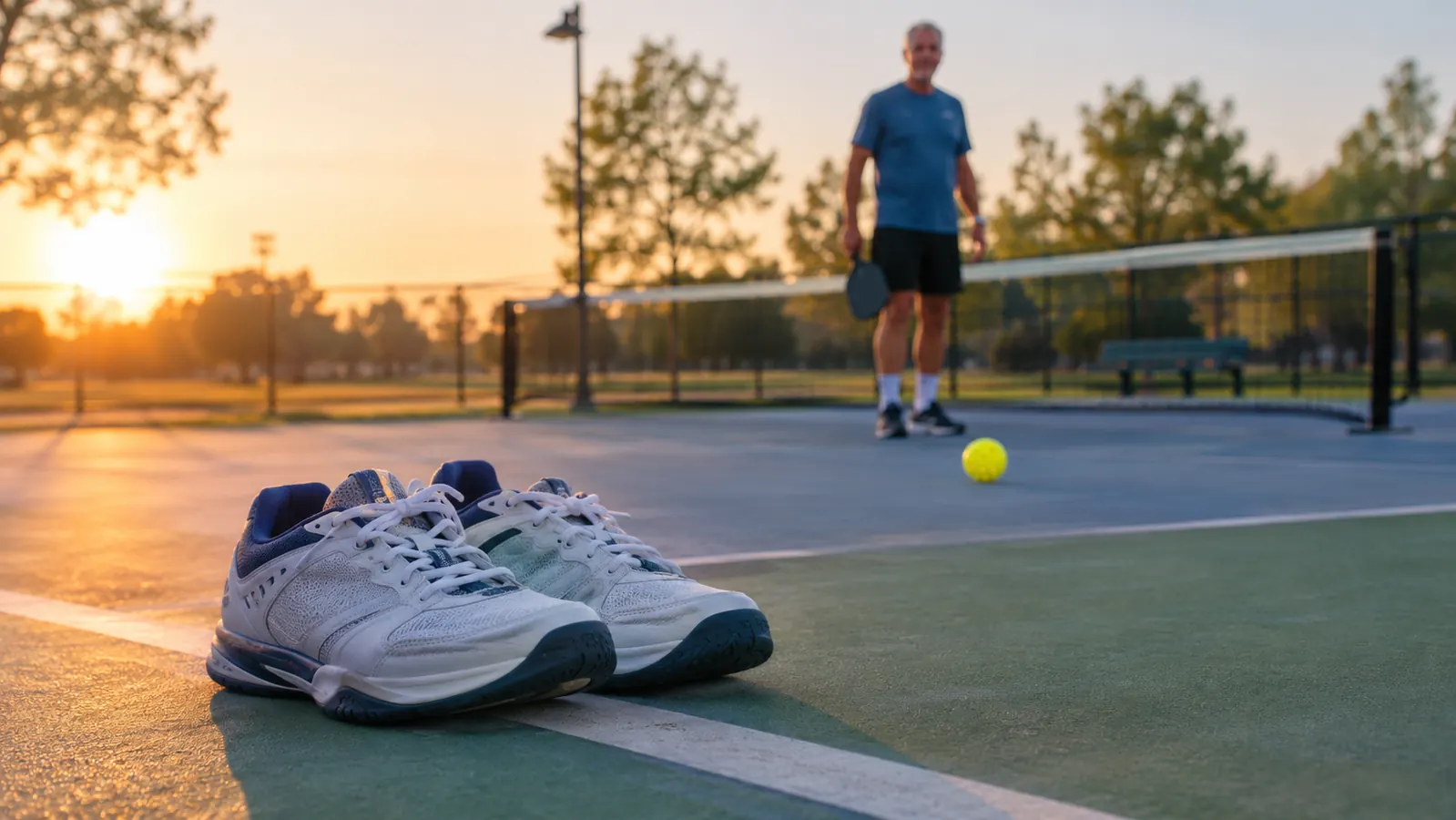
If your knees are past fifty, the first question about any court shoe is not how it looks. It is whether your knee still feels fine the next morning. I am Gene Whitacre, I am 64, I have a right knee that was scoped years ago, and I play pickleball four or five mornings a week at the park courts in Santa Rosa. I put six weeks of doubles on the ASICS Gel-Dedicate 8 and the Skechers Viper Court Pro so you do not have to. Short version: both are real court shoes, and they are not close for older knees. The ASICS Gel-Dedicate 8 is the one I kept reaching for.
The Gel-Dedicate 8 is the steady, supportive choice that asks nothing of your joints. The Viper Court Pro is the lighter, quicker shoe that asks a lot more of your ankles and knees. If you are over 50 and play on hard courts, I would put most players in the ASICS. Here is the full breakdown from six weeks of morning doubles.
I tested them the way I actually play, not the way a lab would. From the first week of March through mid-April, I wore the ASICS on Monday, Wednesday, and Friday mornings and the Skechers on Tuesday and Thursday. Most sessions ran about two hours of doubles at the city park courts, and I kept a small spiral notebook in my bag. After every session I wrote down three things: how my right knee felt when I climbed out of the car, whether my heel stayed put on a hard lateral cut, and anything that rubbed or pinched. I started with the Skechers on the first Tuesday because the lighter shoe seemed like the safer way to ease back in after a winter of lighter play. That first morning told me more than I expected. By the third game my right knee was talking to me, not loudly, but it was talking. I switched to the ASICS the next morning and the same knee stayed quiet through the whole session. The city park courts are concrete with a painted acrylic topcoat, which is harder than the indoor wood at the rec center, and that surface is why cushioning mattered more than quickness in my notes. Two sessions got rained indoors to the rec center, which turned out to be useful. The indoor surface is slicker, and the shoes behaved differently on it, and that is part of why the durability notes below read the way they do.
| ASICS Gel-Dedicate 8 | Skechers Viper Court Pro | |
|---|---|---|
| Cushioning | Gel in the heel and forefoot, plush from the first step, easy on a scoped knee | Lighter and firmer, more court feel but less shock absorption |
| Lateral support | Stiff external heel counter and wide base keep the foot stable on hard cuts | Flexible and agile, but the ankle has to do more of the work |
| Weight | Heavier, noticeable when you first switch | Noticeably lighter, easier to move in for quick hands |
| Fit | True to size, medium width, easy to lace snugly | Runs a touch long, narrow through the midfoot |
| Durability on outdoor courts | Outsole held up well over six weeks of outdoor play | Showed earlier wear on the drag point |
| Best for | Players over 50 who want to feel fine the next day | Younger or lighter players who want maximum quickness |
That table is the honest version of six weeks of notes. The Viper Court Pro wins the weight column, and it should. It is a faster shoe. But for a 64-year-old knee that has already been under a scope, the ASICS Gel-Dedicate 8 wins the columns that actually decide whether I play again tomorrow.
Where the ASICS Gel-Dedicate 8 Wins
Cushioning is the first thing I noticed, and it is the reason I kept choosing the ASICS. The Gel-Dedicate 8 has gel units in the heel and forefoot, and on the first morning at the park courts I felt the difference on the very first step. My right knee, the one that was scoped, has a way of announcing a bad shoe by the end of a session. After two hours of doubles in the ASICS, it did not announce anything. After the same two hours in the Viper Court Pro, it reminded me it was there. That is the whole comparison in one sentence.
Lateral support is the second big win. Pickleball is a game of short, explosive sideways movements, and older knees do not love a shoe that lets the foot roll. The Gel-Dedicate 8 has a stiff external heel counter and a wide base that keep the foot planted when I lunge for a low shot. The heel counter is stiff enough that I could not flex it sideways with my hands on the first day, and that stiffness is exactly what my ankle wants when I am backpedaling to the baseline. My foot does not roll, and when the foot does not roll, the knee does not twist. The Viper Court Pro is more flexible, which makes it feel agile, but it asks my ankle and knee to do the stabilizing work. At 64, I would rather let the shoe do it.
The morning that settled it was a Thursday in early April. Linda and I had the first match of the day, and the courts were still damp from an overnight sprinkle, the worst surface for a shoe that does not hold. I was in the ASICS. There is a low shot that skims just inside the kitchen line, and I went down for it hard, right knee first, the way I have a thousand times. The shoe caught me. The heel counter held, the wide base kept my foot flat, and I got up and finished the point. We won the point, and Linda, who notices everything, asked if my knee was okay before I even said anything. Two weeks earlier, the same lunge in the Skechers had left me favoring that leg for the rest of the morning. That is what I mean when I say the ASICS asks nothing of your joints.
Want the court shoe that protects a scoped knee?
The ASICS Gel-Dedicate 8 is the shoe I kept reaching for over six weeks of morning doubles. It cushions the heel, supports lateral cuts, and my knee felt fine the next day. Check today's price on Amazon and see if it fits your foot the way it fit mine.
Amazon Check Today's Price on Amazon →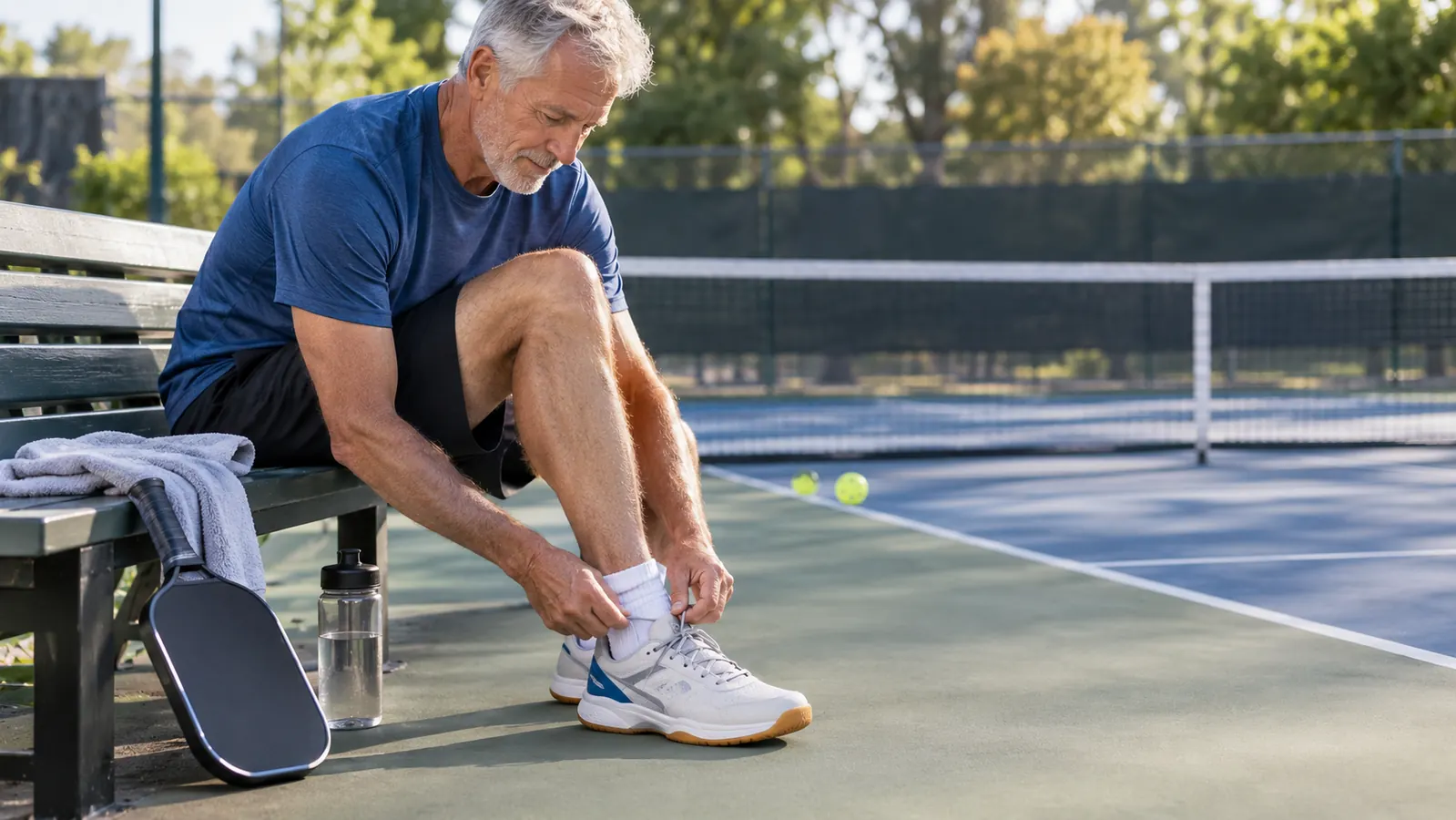
Where the Skechers Viper Court Pro Wins
I will give the Viper Court Pro full credit where it earned it. It is lighter, and you feel it on the third game of a morning. The ASICS Gel-Dedicate 8 is not a heavy shoe, but it is a solid one, and after two hours my feet knew it. The Viper Court Pro is the shoe I would want if I were 20 years younger and playing singles on a fast indoor court. It moves when I move, and it lets me change direction without thinking about the shoe at all.
I weighed both shoes on the kitchen scale the first week, just to see if the lightness was real or imagined. The Skechers came in about two ounces lighter per shoe, and two ounces does not sound like much until you have lifted your foot a few thousand times in a morning. On the third game of a doubles session, when my legs were getting heavy, I noticed I was not thinking about the Skechers at all. I was just moving. The ASICS never felt heavy, but it was always there, a solid presence under my foot. I weighed them again at the end of the six weeks, after both had picked up some court dust and wear, and the difference was still about two ounces. There is a trade in that, and the trade is the whole point of this comparison.
The Viper Court Pro also has a lower, firmer ride that gives you more court feel. Some players love that. You can feel the surface, you can feel your footwork, and you can trust the shoe to get out of the way. The indoor sessions at the rec center made the Skechers look its best. On the slicker wood surface, the lower ride gave me a better feel for the floor, and I could stop and start with less effort. If the rec center were my only court, I might have reached for the Skechers more often. But I play outside four mornings out of five, and on outdoor concrete the extra court feel did not matter as much as the extra cushioning. For a younger player or a lighter player who wants maximum quickness, that is a real advantage. It is just not an advantage that matters more to me than knee comfort at the end of a session. If your knees are fine and your game is fast, the Viper Court Pro is the more exciting shoe. If your knees are older, the ASICS is the smarter one.
After two hours of doubles, my scoped knee did not announce anything in the ASICS. In the Skechers, it reminded me it was there.
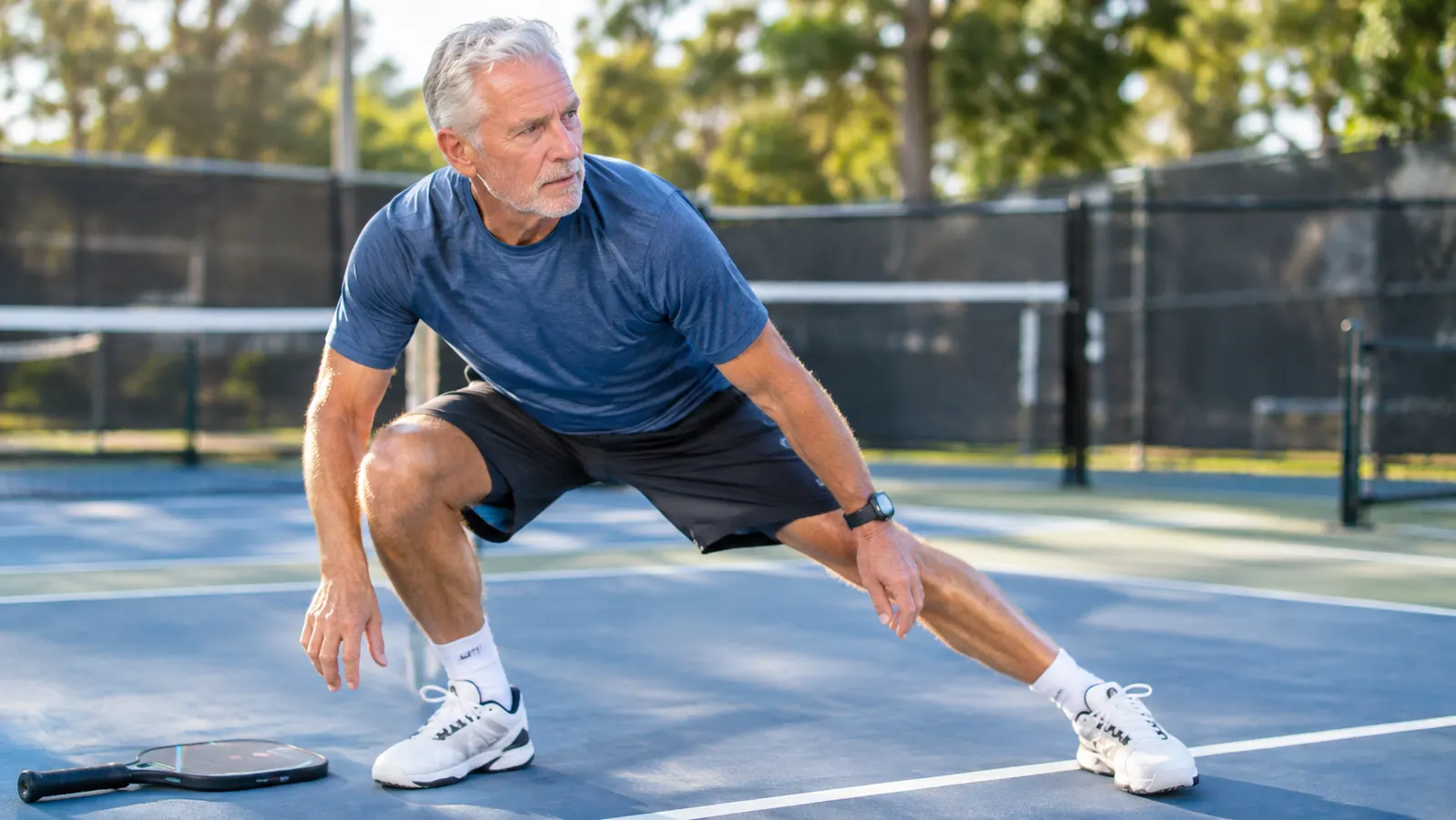
Fit, Durability, and the Details That Showed Up Over Six Weeks
Fit is where the two shoes really separate. The ASICS Gel-Dedicate 8 runs true to size in a medium width, and the lacing is easy to snug down so my heel stays put. The ASICS laces are the flat, slightly stretchy kind that stay where you put them, and I could snug the top eyelet without strangling my arch. The Skechers laces are rounder and worked loose on me twice a session for the first two weeks, which is a small thing that gets old. The Skechers Viper Court Pro runs a touch long and is narrower through the midfoot. For me, that meant a little extra room in the toe in the Skechers and a snugger squeeze across the arch. I also noticed the ASICS toebox gives my toes room to spread on a hard stop, while the Skechers pinched a little across the arch by the end of a long morning. I wore the same thin ankle socks for every session, the ones I have worn for years, so the fit notes are about the shoes and not about a new pair of socks. Neither was a dealbreaker, but the ASICS fit my foot with no fuss from day one.
Durability is the detail that surprised me most. I play outdoors on hard courts, and the drag point on my back foot takes a beating. After six weeks, the ASICS outsole still looked solid. The Viper Court Pro showed earlier wear at the same spot. I did not expect that from a lighter shoe, but the evidence was right there on the sole. If you play as often as I do, the ASICS is likely to last you longer, which matters when you are choosing between two court shoes.
The wear showed up on a specific date, which is the kind of thing I write down because I am an engineer and I cannot help it. On April 22, about seven weeks in, I turned the Skechers over and saw the drag point under the outside of my right heel worn smooth, with the texture gone in a patch about the size of a quarter. The ASICS, which had seen the same number of sessions, still showed the original tread pattern in that spot. I checked both shoes the same morning, side by side on the bench, so it was not a memory thing. Same court, same footwork, same number of games. The outsoles were not the same. I took a photo of both soles with my phone that morning, and the difference is still the first thing you see when you scroll through my camera roll.
One more thing worth noting: the ASICS Gel-Dedicate 8 needed almost no break-in. I wore it for a full session on the first morning and had no blisters, no hot spots, nothing. The Viper Court Pro was fine too, but the ASICS was the shoe I forgot I was wearing, and for a court shoe, that is the highest compliment I can give.
Who Should Buy Which
Buy the ASICS Gel-Dedicate 8 if you are over 50, if you play on hard outdoor courts, if you have a knee that has seen better days, or if you simply want a court shoe that cushions every step and holds your foot steady on lateral cuts. That is most recreational players I know, including the ones I play with at the Santa Rosa park courts. It is the shoe I would buy again tomorrow.
Buy the Skechers Viper Court Pro if you are younger, lighter, or playing fast indoor singles, and your knees do not complain after a long session. It is the quicker shoe, and on the right foot it is a joy to move in. But if you are reading this article because your knees are older and you want to keep playing for years, the ASICS Gel-Dedicate 8 is the safer bet. My knee cast the only vote that counts, and it voted for the ASICS.
My pick for older knees: the ASICS Gel-Dedicate 8
Six weeks of morning doubles, one scoped knee, and a clear winner. The ASICS Gel-Dedicate 8 cushioned every step, held my foot steady on lateral cuts, and had me feeling fine the next day. Check today's price on Amazon.
Amazon Check Today's Price on Amazon →