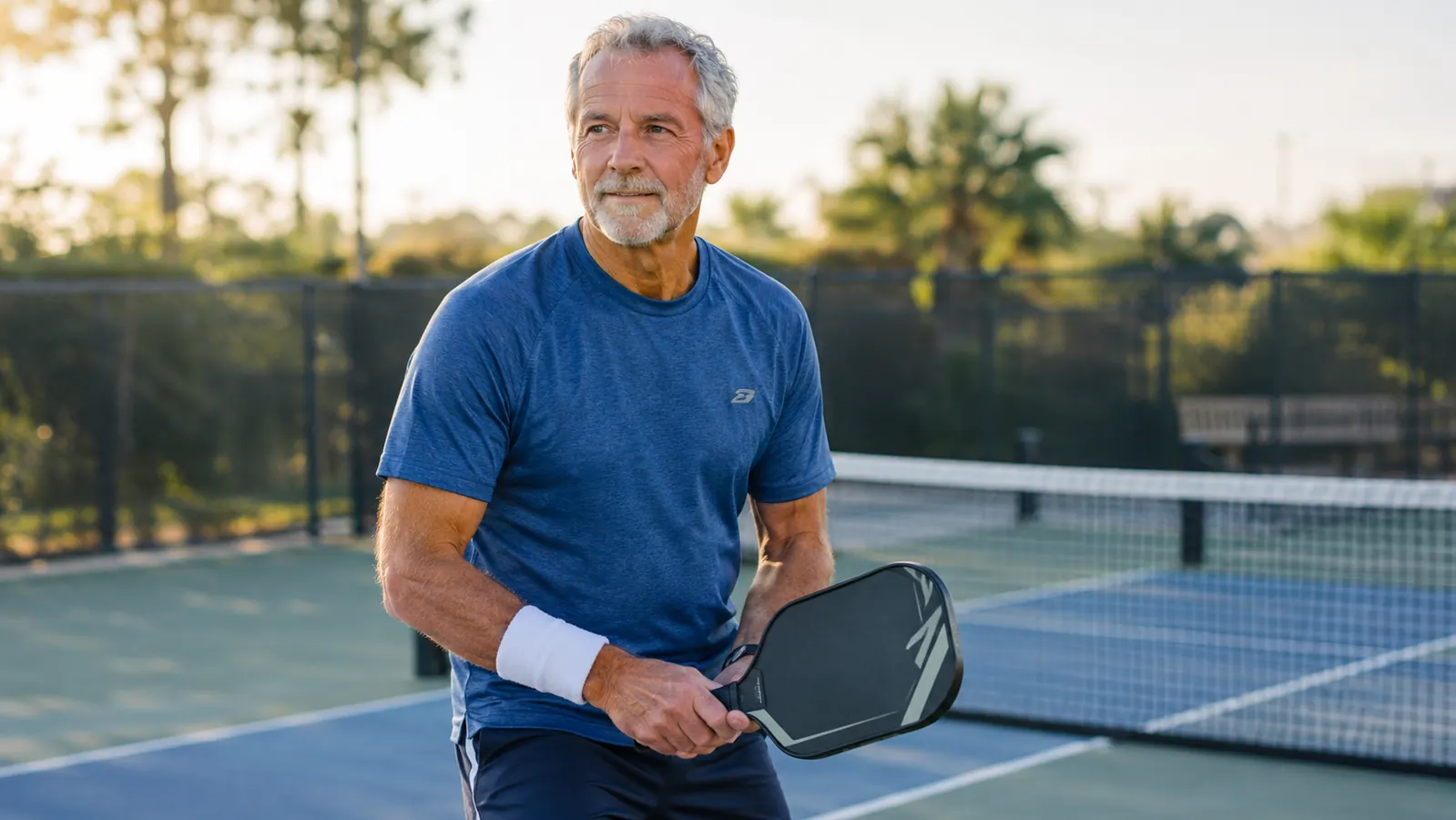
If you are over 50 and playing pickleball in the same running shoes you wear for walks, I have been you. Five years ago a neighbor talked me into a Saturday clinic, and I switched from tennis to pickleball while keeping the same running shoes I already owned. They were comfortable and broken in, the pair I wore for morning walks around the neighborhood. Then my right knee, the one I had scoped in my forties, started talking to me after every session. By the third week I was icing it after doubles. A friend at the courts pointed out what I had been missing: running shoes are built for moving in a straight line, and pickleball is mostly side to side. The fix was a real pair of court shoes from ASICS, the Gel-Dedicate 8, and the difference showed up within the first week.
This list is for recreational players, the ones holding down the community-center doubles games and the park courts on Saturday mornings. You do not need the lightest tournament shoe on the market. You need lateral support, a flat enough sole for quick changes of direction, and cushioning that does not disappear halfway through a third game. Here are ten reasons court shoes beat running shoes for pickleball.
The Shoe I'd Put on a Rec Player Over 50 First
After months of morning doubles, the ASICS Gel-Dedicate 8 is the court shoe I recommend to anyone at our courts who asks. It gives you the lateral support running shoes lack, without the stiffness of a high-end tournament shoe.
Amazon Check Today's Price on Amazon →Running Shoes Let Your Foot Roll on Hard Cuts
Running shoes are designed for heel-to-toe motion. The thick, soft midsole feels great when you are jogging, but on a pickleball court you are constantly planting, cutting, and pushing off sideways. That tall, squishy stack lets your foot roll over the edge of the sole when you change direction. I felt it most on a backhand lunge during a Tuesday morning doubles game: my foot rolled over the edge of the sole and my knee took the hit. I finished the game, but I limped through the next one. Court shoes sit lower to the ground with a wider base, so your foot stays flat when you plant. For a 64-year-old knee that has already been scoped once, that is the whole ballgame.
Lateral Support Is the Whole Sport
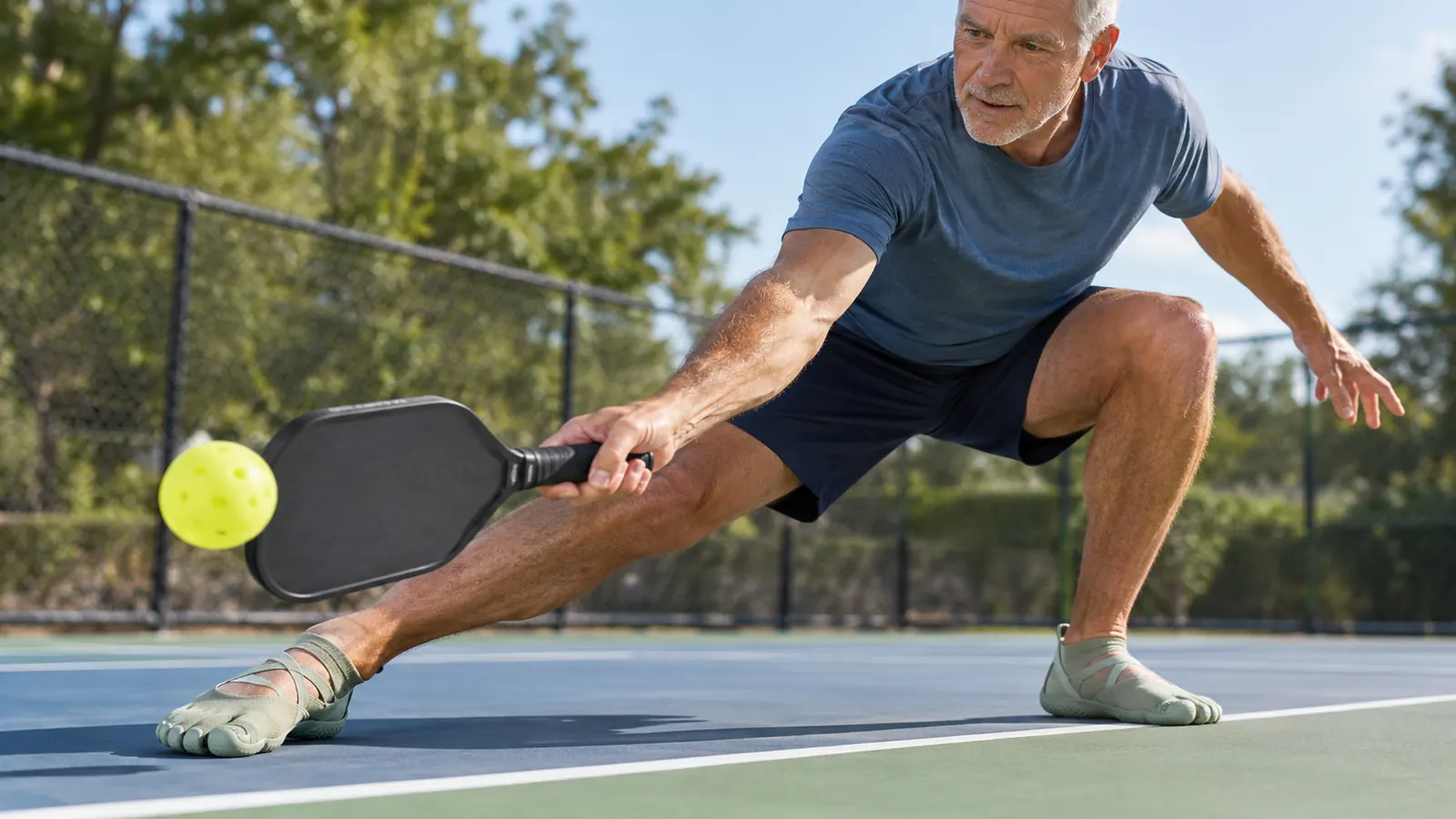
Pickleball is roughly 70 percent side-to-side movement. Running shoes are built to handle forward motion and almost nothing else. Court shoes add a firmer midsole and a reinforced upper that holds your foot in place when you lunge for a dink shot. The ASICS Gel-Dedicate 8 has that firm lateral structure built in. My right knee stopped complaining within two weeks of switching.
Outdoor Court Grip Beats Rubber Made for Pavement
Running shoe outsoles are tuned for asphalt and treadmills. Court shoes use a gum-style rubber formulated for painted lines, acrylic courts, and concrete. On the outdoor courts where I play most mornings, the difference is obvious when you push off for a backhand. The ASICS outsole grips the surface instead of sliding a half inch before catching.
A Lower Heel Keeps You From Toppling on Backpedals
Most running shoes have a raised heel, often 8 to 12 millimeters above the forefoot. That angle is great for running downhill but awkward for pickleball, where you backpedal and then stop fast. Court shoes have a much smaller heel drop, so your weight stays centered. The first time I wore the Gel-Dedicate 8, I noticed it during warm-up backpedals: I stopped on a dime instead of rocking back on my heels. My old running shoes made me feel like I was standing on a wedge. When I wear them to the courts now, I notice the difference on the very first backpedal.
Cushioning That Lasts Through a Third Game
Running shoe foam is soft when you buy it and compresses fast under stop-and-go play. Court shoes use denser cushioning that holds up to lateral load. The Gel-Dedicate 8 pairs a firm EVA midsole with a gel unit in the heel. One rainy Saturday last winter, Linda and I played three indoor games at the rec center, about two and a half hours total. I checked the clock after the third game because my feet still felt the same as they did at the start. That had never happened with running shoes, which felt flat by the second game.
A Toe Guard That Survives Drag Steps
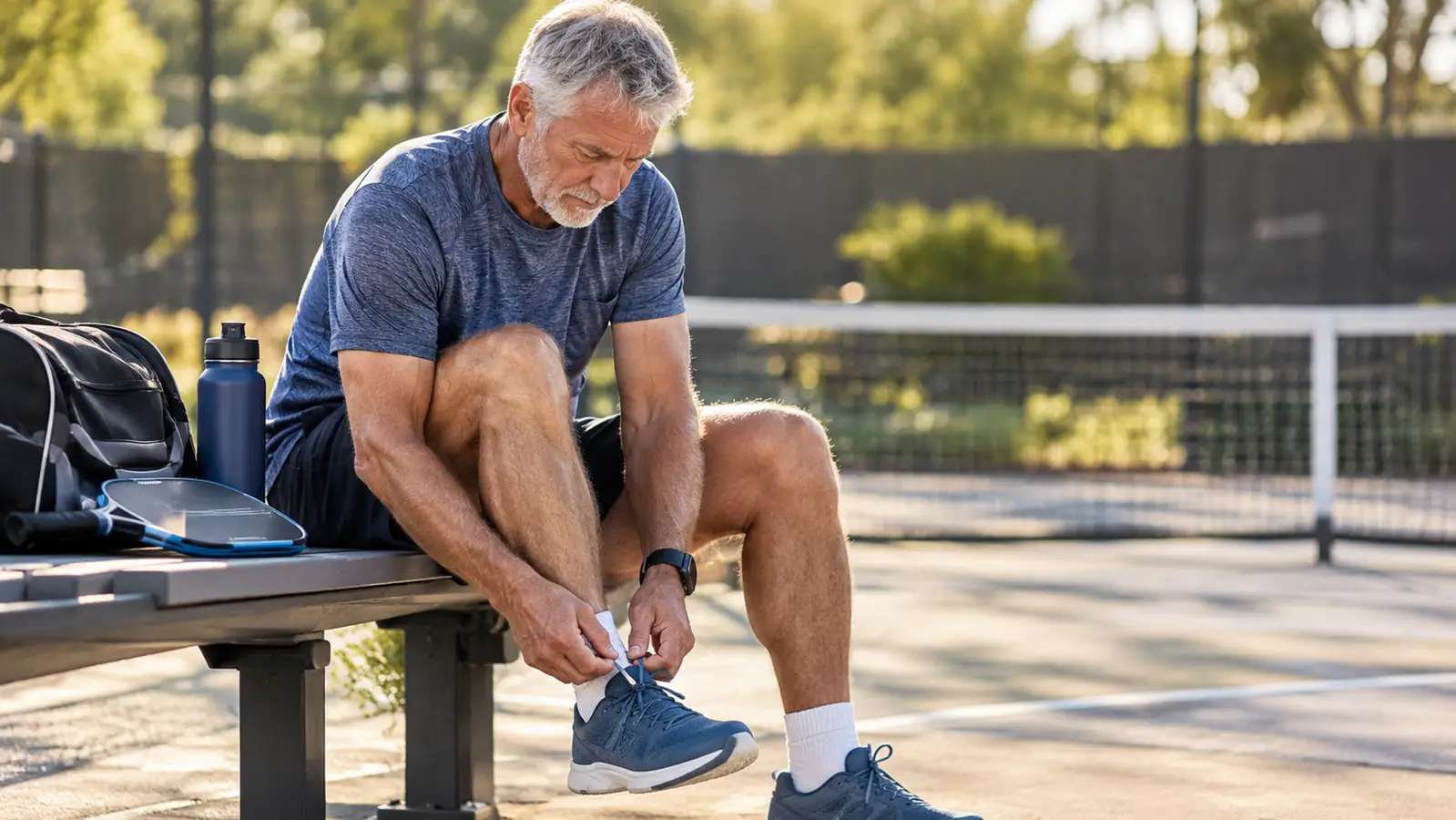
Pickleball players drag their toes on serves, on low dinks, and on those little shuffle steps that keep you ready. Running shoes wear through at the toe in a couple of months because they are built from lightweight mesh. Court shoes add a rubber toe cap or a reinforced overlay. The ASICS Gel-Dedicate 8 has a solid toe bumper that has held up through months of morning play.
The Upper Holds Your Foot on a Lunge
A running shoe upper is flexible and breathable, which is good for miles of straight running and bad for a hard lateral lunge. Your foot slides inside the shoe and you lose the split second you need. Court shoes use a stiffer, more structured upper with a secure midfoot fit. I tightened the laces on my Gel-Dedicate 8 once at the start of a session and did not touch them again for two hours.
Less Cushion Means More Court Feel
It sounds backwards, but a firmer shoe helps your footwork. Running shoes isolate you from the court with thick foam, so you cannot feel exactly where your foot is when you set up for a shot. Court shoes give you enough feedback to know your stance is right. You do not need a barefoot shoe to get that. The Gel-Dedicate 8 is firm without being harsh.
They Protect the Knees You Still Need
This is the reason that matters most to me. The lateral support and lower heel of a court shoe keep your knee aligned when you plant and cut. Running shoes let the ankle roll, and the knee follows. Before I switched, I would wake up the morning after a session and feel a dull ache in my right knee. Some mornings I would grab the bathroom counter to put weight on it. Now, after four or five mornings a week, it feels fine. That alone is worth the switch.
One Pair Can Handle Indoor and Outdoor Courts
Court shoes are designed for the same grip and support on indoor wood or tile and outdoor acrylic or concrete. I play outdoors at the city park courts and move indoors to the rec center when it rains. The ASICS Gel-Dedicate 8 works on both without me thinking about the surface. Running shoes never gave me that confidence.
What I'd Skip
If you already have a pair of dedicated court shoes that fit well and support your feet, you do not need to buy a new pair just because this one is popular. The Gel-Dedicate 8 is not the stiffest or most aggressive shoe on the market, so if you are a tournament player who wants maximum stability, a higher-end model might suit you better. And if you have very wide feet, try the fit before you buy, because the toe box runs medium. For the recreational player playing doubles a few mornings a week, this is the pair I would pick.
My right knee, scoped in my forties, feels fine after four or five mornings a week now. That alone is worth the switch.
Start Tomorrow Morning With the Right Shoe
You do not need to overhaul your game to protect your knees. You just need a court shoe with lateral support. The ASICS Gel-Dedicate 8 is the pair I recommend to every rec player over 50 who asks.
Amazon Check Today's Price on Amazon →