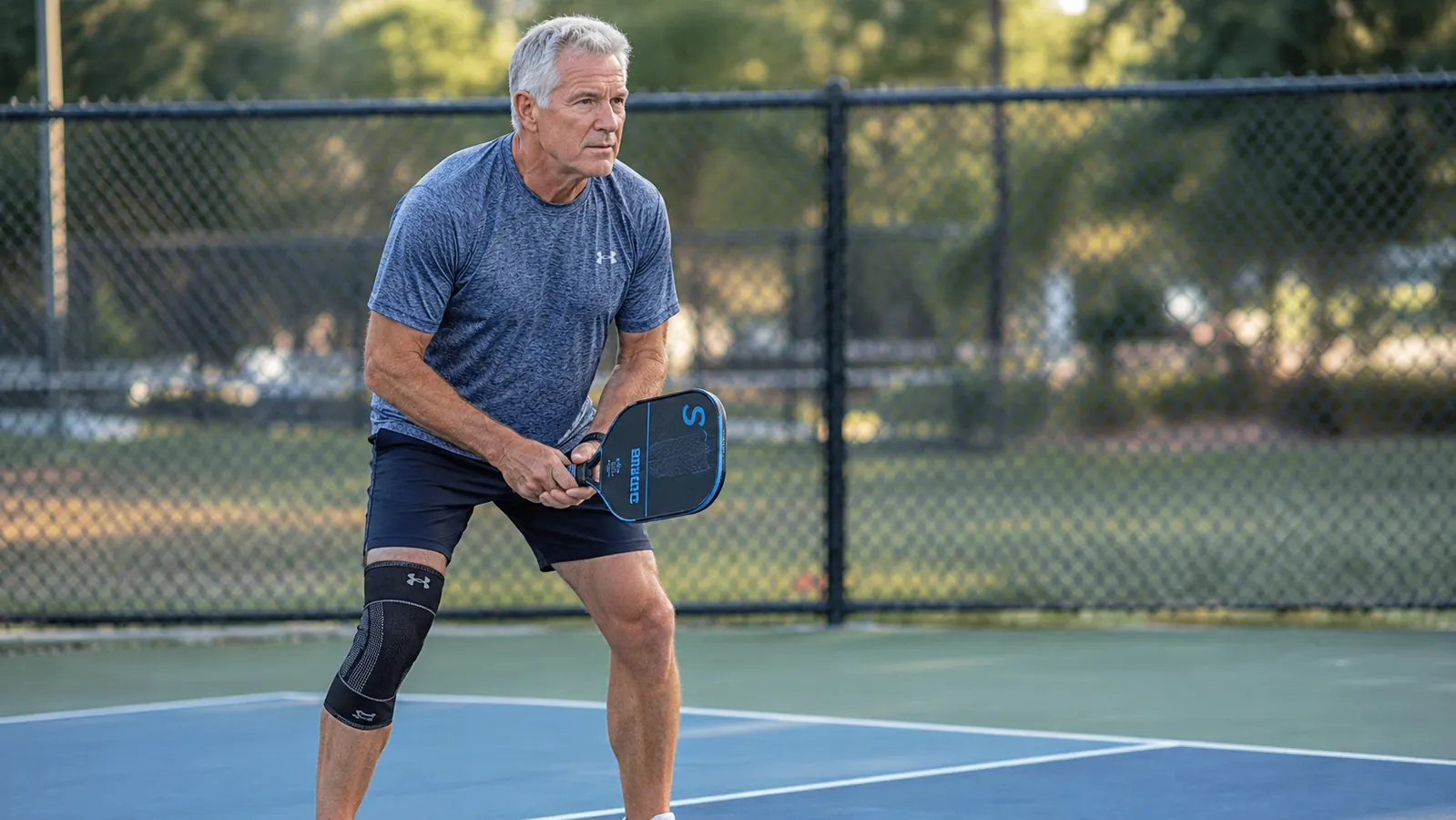
The first time my right knee barked at me on a pickleball court, I was chasing a short pop to the backhand side. It was a Tuesday in late September, the third game of a four-game morning, and the ball got past me at the net line. Nothing dramatic. No fall, no twist, just a sting that got louder every time I pushed off for the next shot. I played through it, because that is what guys my age do, and I spent the next two mornings on the couch with a bag of frozen peas on my knee. That was the week I stopped treating knee pain as something to tough out and started treating it as something to manage.
I am Gene Whitacre. I am 64, I live in Santa Rosa, and I have played pickleball four or five mornings a week for about five years. I also had my right knee scoped years ago, which means I have a standing invitation for stiffness and a low tolerance for lateral movement. Before I found the Modvel knee brace, I tried a neoprene wrap with velcro straps that bunched behind my knee every time I bent it, and a cheap elastic sleeve from the drugstore that rolled down toward my ankle by the second game. The Modvel was the third thing I tried, and it is the one that stayed in my bag. This guide is the routine I actually use, built around that sleeve, which I have worn for enough months that the elastic has relaxed and I have learned what it will and will not do.
The knee sleeve I keep in my bag every single morning
The Modvel knee brace is the one piece of gear I reach for before every session. It is not a cure and it does not fix a torn meniscus, but it gives my knee the warmth and compression it needs to get through four or five games of doubles without complaining the next day.
Amazon Check Today's Price on Amazon →Step 1: Measure your leg, not your pants size
Most knee sleeve sizing mistakes happen before the sleeve ever touches your leg. People order based on their height, their weight, or the size jeans they wore in 1998, and then they wonder why the sleeve bunches behind the knee or slides down mid-game. The Modvel brace is sized by the circumference of your thigh, measured about four to six inches above the kneecap, and that single number decides everything.
Use a soft measuring tape and take the measurement with your leg straight, not flexed. My own thigh measures 19 inches about five inches above the kneecap, which puts me in a large. The first sleeve I ordered was a medium, because I wear a medium in everything else, and it rolled into a rope behind my knee before the first game ended. If you are between sizes, go up. A sleeve that is slightly roomy stays put better than one that is slightly tight, because a too-small sleeve cuts off circulation while you are playing. Modvel lists its size chart on the product page, and it is worth checking before you order rather than assuming a medium is a medium.
If you do not own a measuring tape, a piece of string and a ruler work fine. Wrap the string around your thigh, mark the point where it overlaps, and lay it flat against a ruler. This takes two minutes and it is the difference between a sleeve you forget you are wearing and a sleeve you are adjusting between every point.
Step 2: Put it on the right way, before you warm up
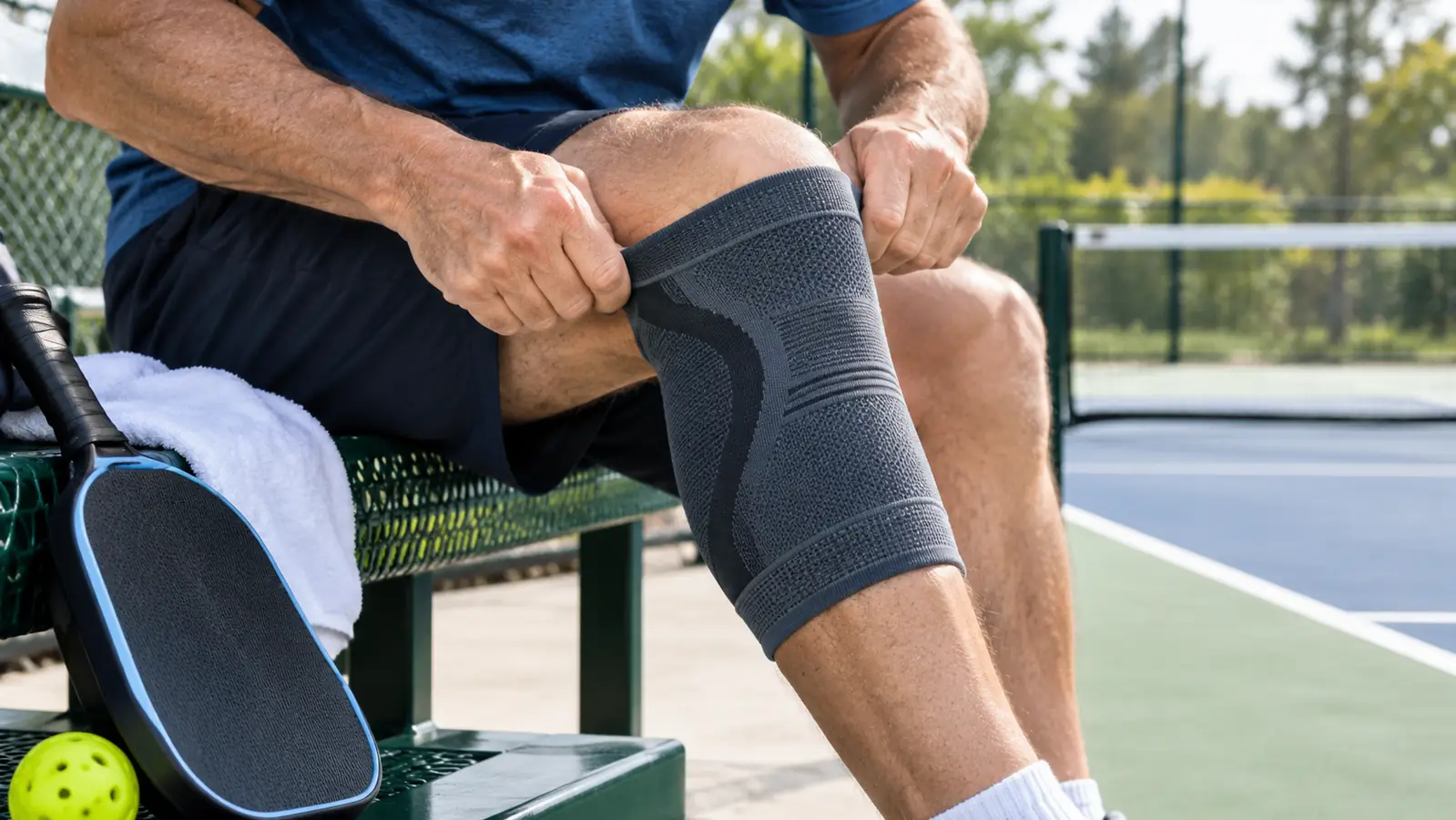
The Modvel knee brace goes on over bare skin or over a thin base layer, never over thick sweatpants. The sleeve has a silicone strip along the top edge that is designed to grip your thigh and keep the sleeve from sliding down. For that strip to work, it needs direct contact with your skin, so roll the sleeve into a donut shape before you pull it on. Put your foot through the opening, position the donut over your kneecap, and unroll it up your leg. This takes about ten seconds and it keeps the fabric from bunching.
The kneecap opening should sit right over the center of your patella. There is a reinforced area around the opening that provides a little extra stability, and if it is rotated even slightly, you will feel it on your first lunge. The first time I wore mine, I skipped the rolling step and spent the whole first game tugging at the top edge. Rolling it into a donut before you pull it on fixes that completely. I have also found that the sleeve settles into place better if I put it on before I start moving. If I wait until after my first game, my knee is already a little puffy and the fit feels different.
One honest note: the silicone strip is the part of this sleeve that wears out first. After several months of washing, the grip gets less aggressive and you will find yourself tugging the sleeve up between games. That is normal and it is not a reason to panic. It is a reason to follow the care instructions in Step 5.
Step 3: Wear it for the whole session, not just the games
A compression sleeve does its best work when your muscles are warm and your blood is moving, which is why I put mine on before my warm-up and leave it on through my cool-down. The compression keeps the muscles around the knee engaged and supported while the fabric holds heat against the joint. That warmth is not a gimmick. It is the same reason players wear leggings on cold mornings.
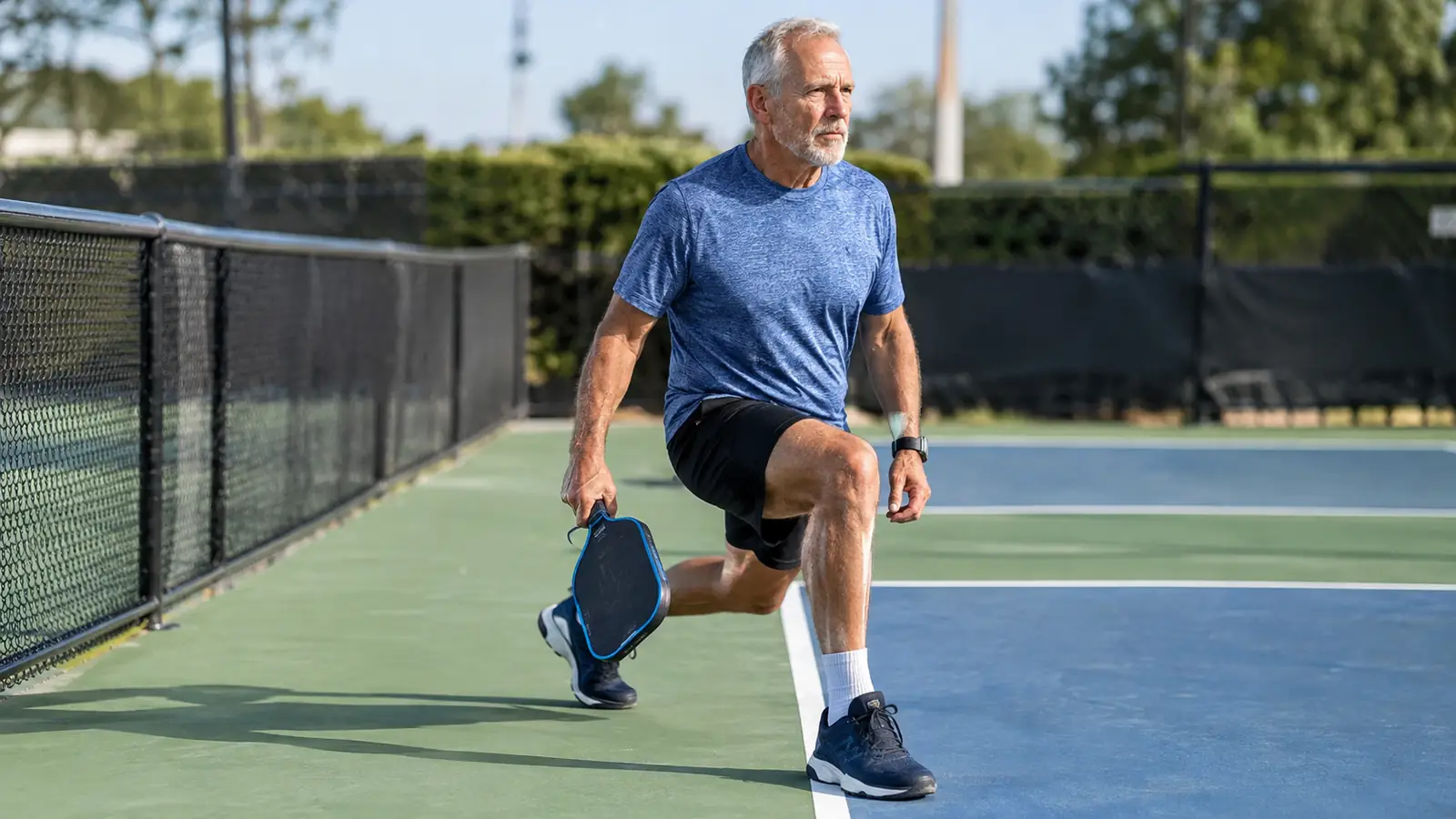
My warm-up is simple: two minutes of walking lunges, ten slow bodyweight squats, and a few sideways shuffles along the baseline. I do all of it with the sleeve already on. By the time I step to the kitchen line for the first game, my knee feels loose and supported rather than cold and creaky. On damp mornings at the park courts, that difference is obvious by the end of the first set. One damp morning last February I left the sleeve at home and played two games without it. My knee ached on the drive back, and the next morning I was stiff enough to notice every stair. That was the experiment I did not need to repeat.
I wear the Modvel brace for the whole session, which for me is usually four or five games of doubles. If my knee starts to feel tired, I do not tighten anything. I just take a longer break between games and let the sleeve keep doing its job. On the mornings I play indoors at the rec center, I leave it on through the drive home and take it off after I stretch, because the warmth seems to help the stiffness that used to show up around noon. The sleeve is support, not a brace that locks the joint, and it should never feel like it is holding you rigid.
Step 4: Fix your footwork instead of blaming your knee
Here is the part nobody wants to hear: no knee sleeve fixes bad footwork. The Modvel brace is very good at what it does, which is providing compression, warmth, and a little lateral confidence. It cannot unlearn the habit of reaching for a wide ball with a straight leg, or stopping on a hard planted foot, or lunging so deep that your knee tracks past your toes.
The single biggest change I made was shortening my last step before a shot. Pickleball points come at you faster than tennis balls, and the instinct is to take one big step and reach. When I forced myself to take two smaller steps instead, my knee stopped loading at a bad angle and I stopped feeling that sharp sting on the outside of the joint. To make it stick, I started counting the reaches I made with a straight leg. In one session I caught myself doing it eleven times. Two weeks of taking two smaller steps instead of one big one brought that down to two or three, and the sting went with it. The sleeve helped me notice the bad angle, because I could feel the fabric pull when my knee wobbled. That feedback is worth more than any amount of padding.
The other habit that matters is how you finish a shot. If you lunge and then let your back knee drop toward the court, you are putting a twisting load on the front knee. Keep your back foot planted and your weight over the middle of your stance, and your knee will thank you by not hurting on the drive home. Linda pointed this out to me one morning after watching me lunge for a low shot, and it took about a week of reminding before the new finish felt natural.
Step 5: Wash it the way the label says, and replace it when it gives up
The Modvel knee brace is a two-pack, which is convenient because it means you can rotate them on back-to-back mornings. What it does not mean is that you should machine-dry them. I learned that the hard way: I put one sleeve in the dryer on low, just once, and the silicone strip came out wavy and started peeling within a week. Heat breaks down the elastic and the silicone grip, and a dried-out sleeve is a slippery sleeve. I wash mine in cold water with mild detergent and lay them flat to dry overnight. That routine has kept a pair going for months of near-daily use.
How do you know when it is time to replace a sleeve? The signs are easy to spot: the top edge no longer grips, the fabric feels loose over the kneecap, or you are pulling it up between every game. I have also noticed that a worn sleeve stops holding its warmth, which is harder to describe but easy to feel on a cold morning. When that happens, I switch to the second sleeve in the pack and order a fresh pair.
One more thing: wash the sleeve after every few uses, not after every single game. Sweat and skin oils break down the fabric faster than anything else, but a sleeve that is washed too aggressively will also wear out sooner. Every three or four sessions is the balance that has worked for me.
What Else Helps
The Modvel knee brace is the piece of gear I trust most, but it works best as part of a routine. I do the same five-minute warm-up before every session: twenty walking lunges down the sideline, ten slow bodyweight squats, and ten sideways shuffles in each direction along the baseline. I count them out loud, which sounds silly but keeps me honest and keeps my knee from getting surprised by the first lateral move of the day. I keep my steps short on wide balls, and I have learned to take a real break between games instead of standing around stiff. I also stretch my quads and hamstrings after playing, while the sleeve is still on, because the compression helps me feel which side is actually tight. None of this is complicated. It is just consistent.
If you are over 50 and just getting back into a sport that involves lateral movement, I would also suggest starting with shorter sessions. Two games with a sleeve and good footwork will do more for your knee than six games with a sleeve and bad habits. Your knee will tell you when it is ready for more, and the Modvel brace will help you hear it sooner rather than after a week of limping.
The sleeve helped me notice the bad angle, because I could feel the fabric pull when my knee wobbled. That feedback is worth more than any amount of padding.
Start tomorrow morning with a sleeve that fits
Measure your thigh, order the Modvel knee brace, and put it on before your warm-up. It will not make you a better player overnight, but it will make the next morning easier, and that is the part that keeps you coming back to the court.
Amazon Check Today's Price on Amazon →