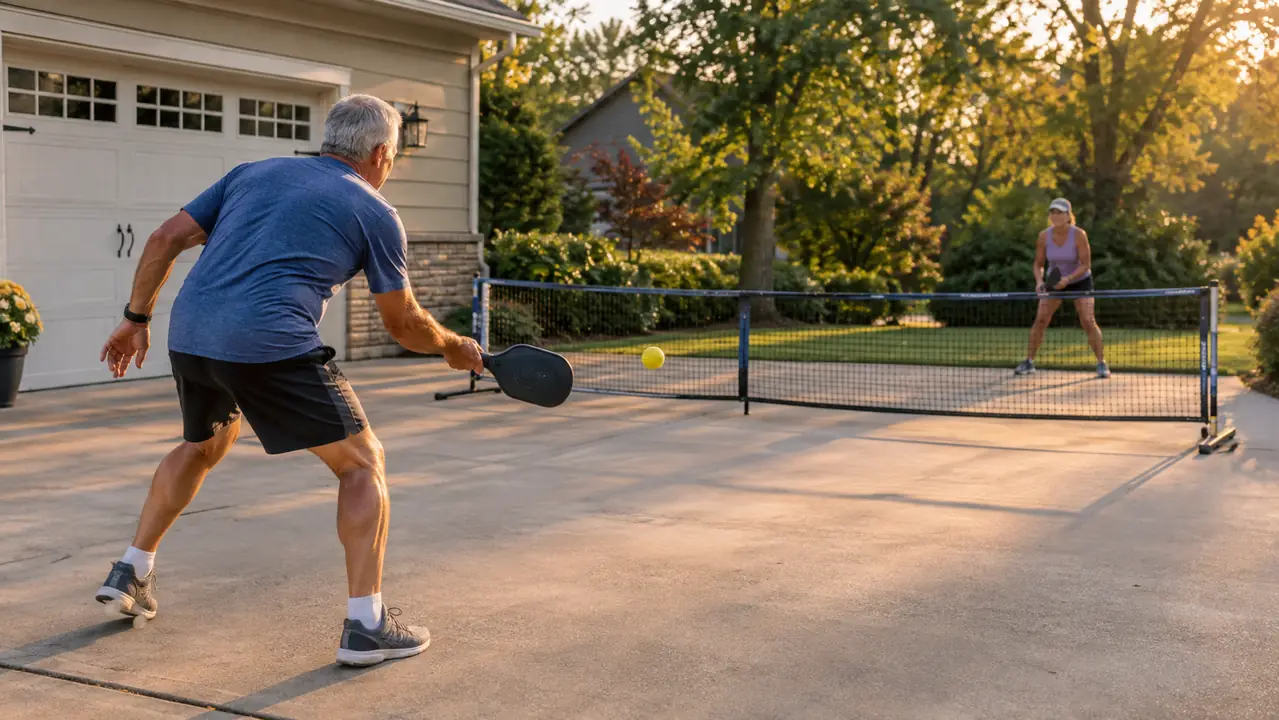
The first time I set up the A11N portable pickleball net in my driveway, Linda watched from the kitchen window and asked if I was building a tomato trellis. Fair question. The box is long, the frame is aluminum, and the net is a mesh panel that folds into a carrying bag about the size of a camping chair. Twelve months later, that same net has survived three California seasons, a couple of windy mornings I should not have practiced in, and somewhere north of four hundred of my mis-hit forehands. It is not a perfect product. It is, however, the reason my backhand dink actually goes somewhere now.
I am Gene Whitacre, 64, a retired civil engineer in Santa Rosa, California. I have played pickleball for about five years, mostly doubles at the city park courts, and I have a right knee that was scoped years ago and a touch of tennis elbow that acts up when I use a heavy paddle. I bought the A11N SPORTS net to drill at home on mornings when the park courts are wet or when I just want twenty minutes of repetition without waiting for a court to open. This is what a year of using it actually looked like.
The Quick Verdict
The A11N portable pickleball net is a sturdy, regulation-sized practice net that has held up through a year of driveway drills, with only a few small annoyances around the carrying bag and the ground stakes.
Amazon Check Today's Price →Want to drill at home without a court?
The A11N portable pickleball net sets up in minutes, folds into a carrying bag, and gives you a regulation-sized target in your own driveway. I have used mine almost every week for a year.
Amazon Check Today's Price on Amazon →How I've Used It
My setup is a two-car driveway with a slight slope, which means the net never sits perfectly level no matter what I do. The A11N SPORTS frame has adjustable feet that help, but on my driveway the right side still ends up about half an inch off the ground. That is a driveway problem, not a net problem. I set it up at the far end, about ten feet from the garage door, leaving enough room to stand at the kitchen line and hit into the net.
In a typical week I use it three or four mornings. I run through the same routine: fifty forehands, fifty backhands, then a set of drop shots where I try to skim the ball low off the net. On rainy days I skip it, because the net is not designed to be left out in weather and I do not want to test the frame joints in a downpour. On windy days I have learned the hard way that the net will catch the wind like a sail, so I either move it closer to the garage or skip the session entirely.
The net itself is the regulation size for a pickleball net: 22 feet wide and 36 inches tall. That matters more than I expected. When I practice on a full court, the net gives me the same visual reference I have at the park, so my aim carries over. The 22-foot width also means I can stand near one edge and aim at the far corner, which is the closest thing to a real cross-court shot I can practice in my driveway. The PE netting has a tight weave that does not stretch out of shape, and after a year of hard hits the mesh still looks like it did on day one.
One morning last February I finally measured the distance instead of guessing. From the back edge of my kitchen line to the face of the net is 21 feet, a little short of the 24 feet I would stand from the baseline on a real court, but close enough that the timing of my swing carries over. I marked the spot with two small chalk dots for my feet, and the session felt more deliberate within five minutes. The slope on my driveway runs downhill toward the street, which means the ball drifts right when it comes back off the net. At first that drove me crazy. Then I realized it was doing me a favor: it forced me to move my feet on every single rep instead of standing flat-footed and swatting at the ball. By March I was getting a hundred clean reps in before Linda finished her coffee. The other thing I learned is that the net rewards a low, flat swing. When I hit the ball flat, it comes back flat, and I can catch it on the bounce. When I chop down on it, the ball shoots up and over the top of the net and I spend the next minute fishing it out of the rosemary bush by the garage. I also learned to count my steps between drills. A quick reset after every miss kept the session from turning into a lazy hitting contest, and it made the fifty reps feel like they meant something.
What the Frame Does Right
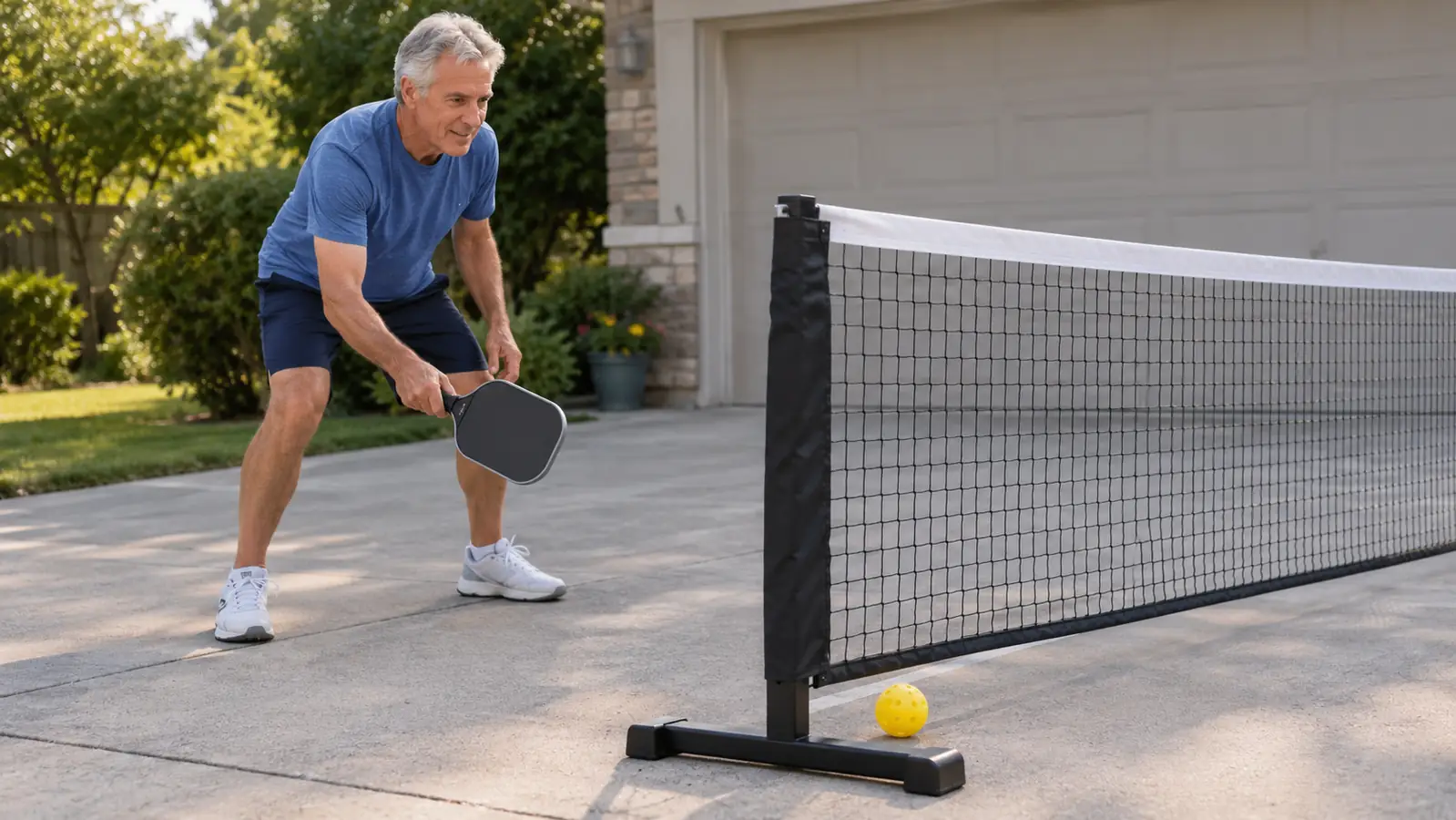
The frame is the part I was most worried about, because cheap portable nets usually have plastic joints that crack or metal poles that bend. The A11N SPORTS frame is a steady metal frame, and after a year I have not seen a single bend or crack. The poles lock together with a simple push-button mechanism, and the whole thing assembles in about five minutes. The first time I set it up it took longer, but once I figured out the order, it became a quick routine.
The net tension is also better than I expected. The frame holds the net tight enough that the ball bounces back with a predictable pace, which is important for drilling. If the net is too loose, the ball dies on impact and you do not get the feedback you need. If it is too tight, the ball rockets back and you spend half your time chasing it. The A11N net sits in a good middle ground, and the tension has not loosened over the year.
The first assembly took me close to twenty minutes, mostly because I put the top rail in backward and had to take it apart twice. The instructions are a single sheet with small diagrams, the kind that assume you have already done this once. Once I figured out the order, the routine is simple: lay the poles out in pairs, click the side frames together, slide the top rail through the sleeve in the net, then walk the net up and lock the legs. I can do it in about five minutes now, and I have done it enough times that I do not need the diagram anymore. The push-button joints are the detail that sold me. Each one has a small button you press to release the pole, and after a year of clicking them together and apart, none of them has stuck or worn loose. That was my biggest worry going in, and it turned out to be a nonissue. One morning in May a gust caught the net while I was reaching for a ball and laid the whole thing over on its side. I expected at least one bent joint. I picked it up, clicked the legs back into place, and finished the session. The frame took the fall without a mark.
Where the A11N Net Falls Short
No product is perfect, and the A11N SPORTS net has a few honest flaws. The ground stakes are the weakest part. They are thin metal pins that hold the frame in place, and on hard-packed dirt or concrete they do not grip well. On my driveway I use small sandbags on the base instead, which works fine but means I cannot rely on the stakes alone. If you plan to set up on grass, the stakes are adequate, but do not expect them to hold in a strong wind.
The carrying bag is also a bit tight. The net and frame fit, but you have to fold the net carefully and roll the poles just right. After a year the zipper still works, but it is not a bag you want to fight with every day. If you plan to pack the net up after every session, give yourself an extra couple of minutes the first few times.
The wind is the real limitation, and I learned that in April. I had the net set up near the street end of the driveway, and a gust came through the gap between the houses and lifted the whole frame a few inches off the ground before setting it back down. It did not damage anything, but it convinced me to check the forecast before I set up. On breezy mornings I move the net tight against the garage wall, where the house blocks most of the wind, and I use the sandbags on both legs instead of just the back two. That setup has held through everything since. The stakes themselves are fine on soft ground, but my driveway is concrete, so they are mostly decorative for me. The bag is the other thing I would change. It is a single compartment with one zipper that runs around three sides, and the net has to be folded into a rectangle before it will fit. The first few times I packed it, I gave up and just carried the whole thing under my arm. Now I fold the net in thirds, roll it tight, and slide the poles in last. It fits, but there is no spare room, and the zipper pulls against the frame when the bag is full.
After a year of driveway drills, the A11N net has held up better than my knees have.
How It Holds Up Over Time
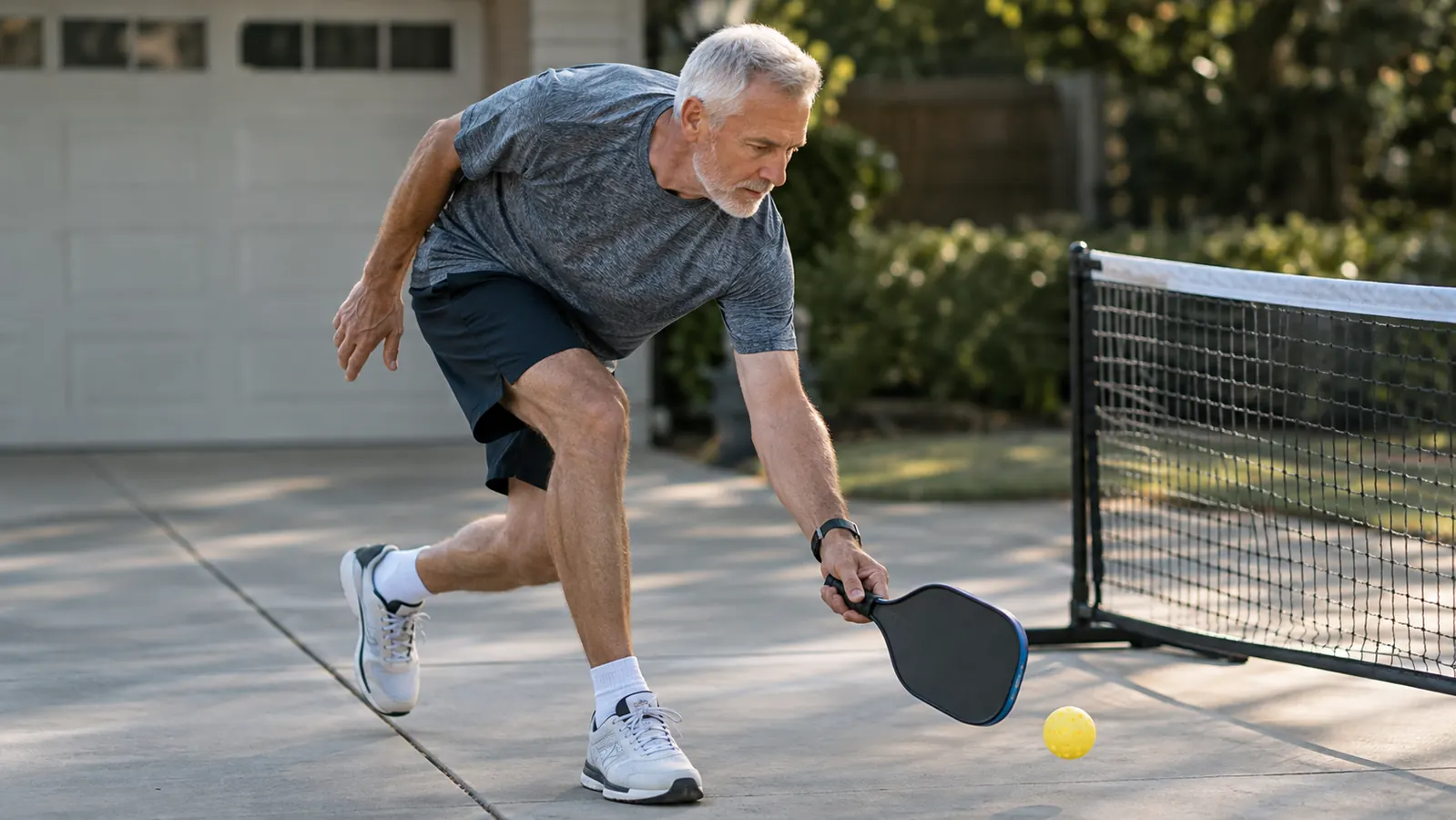
The biggest question I had before buying was whether a portable net would survive regular use. Twelve months in, the answer is yes, with one caveat. The PE netting has not frayed or stretched, and the frame joints are as tight as they were on day one. The only wear I can see is on the bottom edge of the net where it drags against the driveway when I fold it up. That is cosmetic, not structural, and it has not affected performance.
I have also left the net up overnight a few times, which I do not recommend. The frame handles it fine, but morning dew can make the net heavy and the metal poles slippery. If you are going to leave it out, make sure it is on a dry surface and not in a spot where the wind can catch it.
I counted sessions at one point, mostly out of curiosity, and I stopped at 87 because I kept forgetting to mark the calendar. A conservative estimate is somewhere around 120 sessions over the year, plus a few dozen times it sat folded in the garage for a week. The netting shows almost nothing. There is one spot about two feet from the left edge where a bad hit caught the frame corner and put a small scuff on the mesh, but the weave did not tear and the ball still bounces off it the same way. The bottom edge is a different story. It drags on the concrete every time I fold the net up, and the fabric there is starting to look fuzzy. I put a strip of duct tape along the bottom edge in June, and that has protected it since. I also checked the tension a few times with a simple test: drop a ball from shoulder height and see how high it bounces back. In January it bounced back to about waist height. In November it bounced back to the same spot. That is the most convincing evidence I have that the net has not stretched out of shape.
What I Liked
- Regulation size: 22 feet wide and 36 inches tall, so practice carries over to a real court
- Steady metal frame with push-button joints that have not bent or cracked in a year
- Tight PE netting that holds tension and bounces the ball back predictably
- Folds into a carrying bag and sets up in about five minutes
- Sturdy enough for daily driveway drills without loosening
Where It Falls Short
- Ground stakes are thin and do not grip hard surfaces well
- Carrying bag is tight and takes patience to pack
- Not wind-resistant; a gust can catch the net like a sail
- Needs a flat area to sit level, which not every driveway is
Who This Is For
This net is for the player who wants to improve without depending on an open court. If you are over 50, play recreational doubles, and have a driveway or a flat patch of grass, the A11N portable pickleball net gives you a way to get fifty extra reps in before breakfast. It is also great for players who want to work on a specific shot, like a drop shot or a cross-court dink, without the pressure of a game.
It is especially good for players whose knees, like mine, do not love hours of hard court. Drilling against a net is much easier on the joints than playing full-court doubles, because you control the pace and the movement. I have found that a twenty-minute net session leaves my knee feeling better than a single game at the park.
Who Should Skip It
Skip the A11N SPORTS net if you are looking for a wall-mounted or permanent practice setup. A portable net will never be as stable as something bolted to a wall or a post, and if you are a hard hitter who sends balls at the net with real pace, you may find yourself chasing the frame around the driveway. It is also not the right choice if you have no flat surface at all, since the net needs a level area to sit properly.
And if you are the kind of player who wants a net that stays up all season without being touched, this is not it. The A11N net is designed to be portable, which means it is meant to be set up and taken down. Leave it out in the rain for a month and you will probably be disappointed.
Ready to start drilling from home?
A year of driveway practice has made the A11N portable pickleball net the most-used piece of gear in my garage. If you want the same convenience, check the current price on Amazon.
Amazon Check Today's Price on Amazon →